

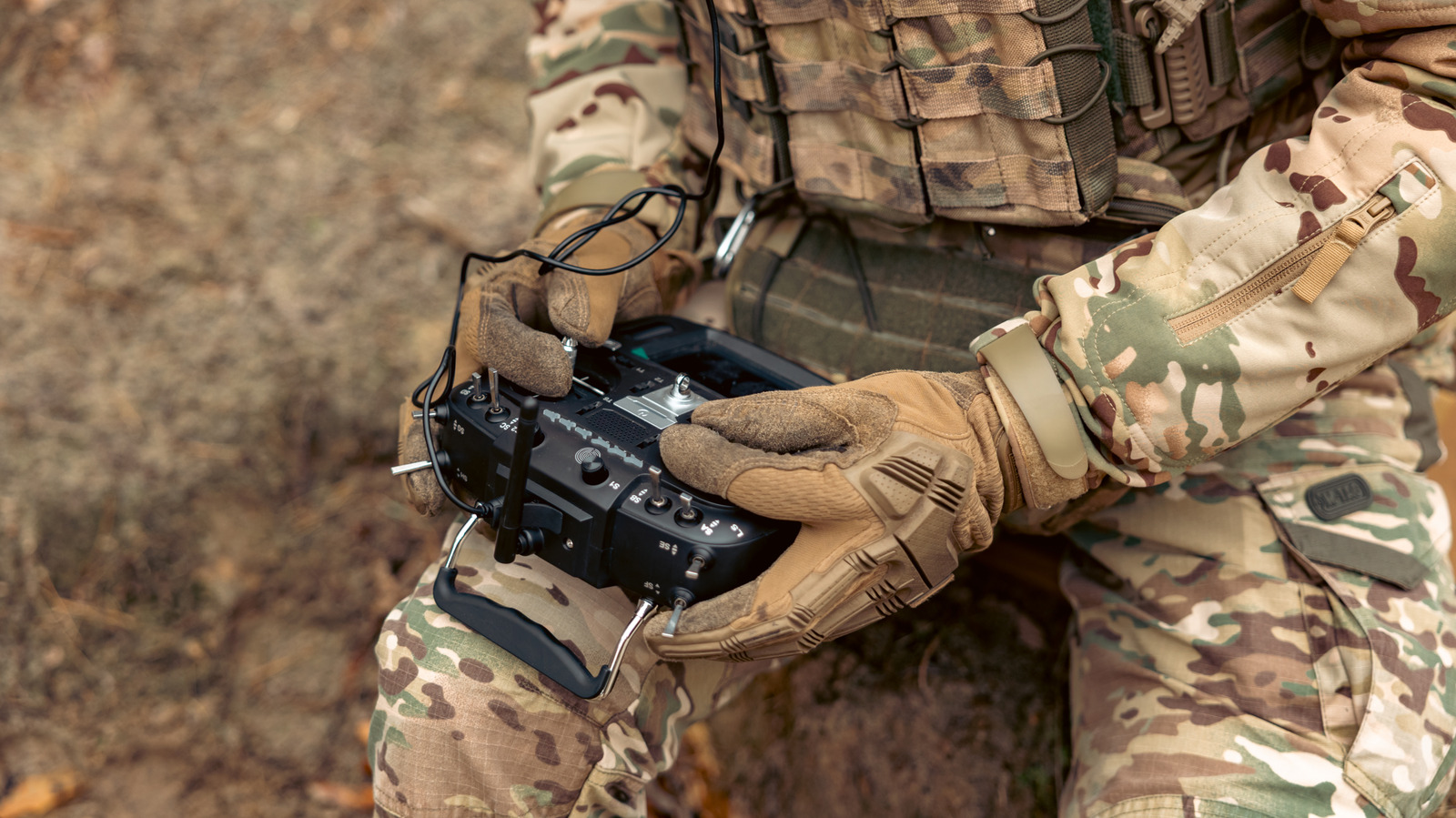
High-Tech Military Gadgets Used By Special Operations Troops
Special operations troops are renowned not just for their skills but also for the sophisticated equipment that supports their dynamic missions. Whether it’s a rescue operation or recon mission, these elite forces rely on cutting-edge technology that often appears straight out of science fiction. While Hollywood tends to glamorize this tech, the reality is just as fascinating. Here are five remarkable high-tech gadgets used by special operations troops around the globe.
Joint Threat Warning Systems
Urban areas present unique challenges for military operations, often providing cover and concealment for adversaries. To navigate this environment, U.S. Marine Forces Special Operations Command (MARSOC) utilizes the Joint Threat Warning System. This compact device, designed for easy transport, scans high-frequency and ultra-high-frequency radio bands to identify and locate enemy communications in real-time.
Equipped with sophisticated mapping features, operators can visually track the source of signals on a tablet-like interface. What makes this system particularly stand out is its Low Probability of Detection/Interception (LPD/LPI) capabilities, enabling Marines to operate discreetly while gathering vital intelligence from the battlespace.
Silent Mortars
Stealth is crucial in combat, and the Russian 2B25 Gull mortar exemplifies this principle. Weighing just 30 pounds, this innovation allows troops to launch high-explosive rounds with an astonishing lack of noise, likened to a silenced rifle. Instead of traditional propelling charges, the 2B25 employs a self-contained piston cartridge that minimizes the audible signature typically associated with mortar fire.
However, this stealth comes at a cost: range. While conventional mortars can deliver payloads over two miles, the 2B25’s effective range is limited to around 0.7 miles. Nonetheless, for special operations that prioritize silence over distance, the 2B25 is an invaluable asset.
Smart Sights
Precision is vital in combat, and the SMARTSHOOTER, known as SMASH 2000, offers special ops teams in the U.S. and Israeli Defense Forces an edge. This sophisticated targeting system allows shooters to acquire and fire at targets with pinpoint accuracy. The SMASH 2000 integrates an optical sighting system, a specialized grip, and a pressure trigger to streamline the shooting process.
What’s groundbreaking about this technology is its autonomous tracking capability, which adjusts based on the shooter’s movement, ensuring accuracy even in dynamic situations. The system also serves a dual purpose, providing an effective counter-drone tool in an era increasingly dominated by UAVs. Although currently used only by select special forces in combat theaters, its potential for wider adoption is clear.
Bone Phones
In the world of special operations, communication can often mean the difference between life and death. Enter the bone-conducting headphones, a remarkable innovation adapted by U.S. Navy Seals for tactical environments. These devices transmit sound through the skull directly to the inner ear, allowing for discreet communication without disrupting one’s surroundings.
Coupled with throat microphones, bone phones enable operatives to remain in contact while minimizing noise. This setup is particularly beneficial in situations requiring stealth, such as navigating hostile territories. When linked to encrypted radios, these systems provide a compact, low-signature communication method essential for successful operations.
Nano or Pocket Drones
The Black Hornet nano UAV epitomizes lightweight reconnaissance technology. Measuring just 7 inches and weighing about 70 grams, this drone can fly distances of over 1.2 miles for up to 30 minutes, making it highly portable and nearly undetectable in sensitive environments.
Deployed as a "Personal Reconnaissance System," the Black Hornet features both thermal imaging and electro-optical cameras, ensuring effective surveillance, even in low-light conditions. Its reduced noise signature sets it apart from traditional UAVs, and its versatility has made it a tactical asset for special forces in various conflict zones, including Afghanistan and Ukraine.
These gadgets illustrate how technology enhances the capabilities of special operations troops. From silent weaponry to advanced surveillance systems, the evolution of military equipment continues to redefine the landscape of modern warfare.



