

In Focus: A Deeper Dive into Economic Leadership in America
Introducing In Focus
In Focus goes beyond the headlines, delivering comprehensive analyses of the political, cultural, and ideological forces shaping America today. With daily contributions from seasoned writers and industry experts, these in-depth pieces illuminate the complexities of current events, enriching readers’ understanding of today’s challenges. For our complete catalog of In Focus articles, you can explore here.
Treasury Secretary Scott Bessent: The Colossus of Economics
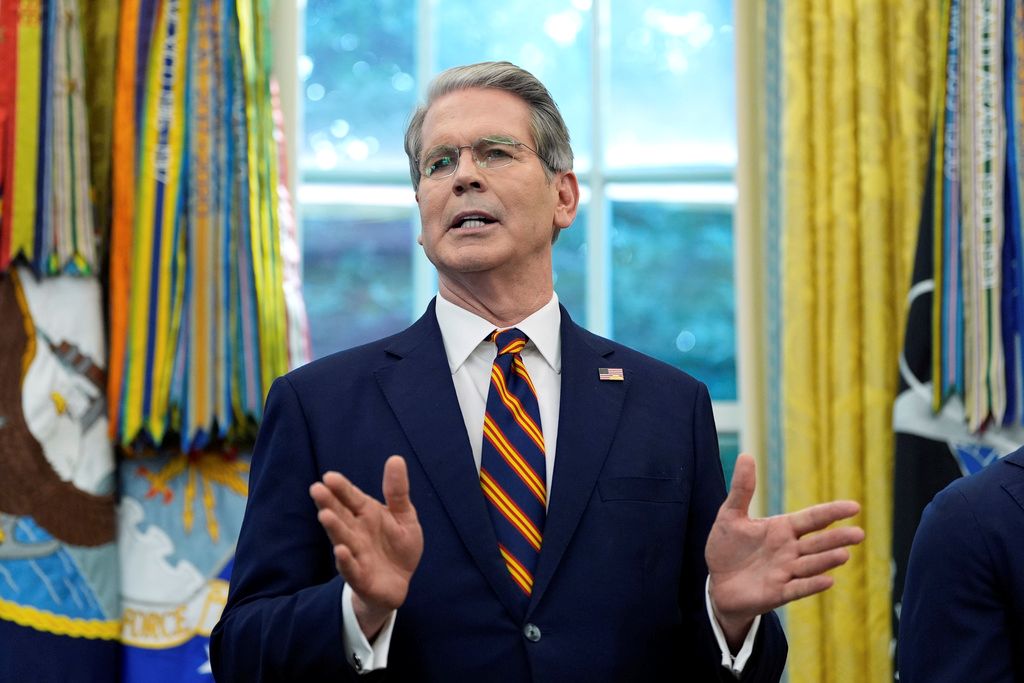
Standing at an impressive 6 feet 4 inches, Treasury Secretary Scott Bessent, at age 63, commands attention—not just for his stature but for his formidable presence within the Trump administration. At a recent gathering in the historic Cash Room of the Treasury building, the mood was celebratory as attendees honored the 50th anniversary of the Laffer Curve, an economic theory credited to the notable free-market economist Art Laffer, who, despite being only 5 feet 6 inches, loomed large in economic discourse.
A Celebration and a Passing of the Torch
This gathering served dual purposes: it was both a tribute to Laffer’s pivotal discovery in economics and a subtle indication of a generational shift in economic leadership. Amidst the revelry, the attendees recognized the balance Bessent provides amidst the Trump administration’s more unconventional economic strategies. His role is not merely to advise but to act as a stabilizing force in a rapidly fluctuating political and economic landscape.
The Enforcer of Market Stability
Bessent’s influence is palpable in the global bond market, where his willingness to confront dissenting voices within the administration enhances investor confidence in the Treasury’s ability to collect revenue. A critical goal for Bessent is to avert a catastrophic tax hike that could accompany the expiration of portions of the 2017 Tax Cuts and Jobs Act. He navigates the delicate balance of being a visible “good cop” on television while adopting a “bad cop” persona behind closed doors in Washington.
A Case of Confrontation: Bessent vs. Pulte
Tensions in the Trump administration were laid bare when Bessent reportedly confronted Bill Pulte, the new director of the Federal Housing Finance Agency, over disparaging remarks. The stark language Bessent used—threatening physical confrontation—illustrates not only his passion for his role but also the high-stakes maneuvering that characterizes Washington, D.C. These confrontations signal Bessent’s determination to protect the Treasury and secure a robust financial future.
The Broader Impact of Policy Decisions
Bessent’s fierce advocacy for maintaining the integrity of the U.S. bond market is driven by the immense challenge of managing a staggering $37 trillion national debt. His stakes are high; he aims to minimize the interest rates borrowers face as they finance this national debt. Every action he takes—from speeches to strategic media interactions—is part of his overarching objective to keep bond yields low and investor confidence high.
The Fragile Ecosystem of the Bond Market
While discussions of the stock market often encompass more tangible events, the bond market’s fluctuating nature is a dance of trust and perceptions. Rather than reacting to singular events, bond yields hinge on a broader interpretation of the federal government’s ability to meet its financial commitments. Bessent’s efforts focus on instilling faith in the federal government’s capacity to recoup taxes and ensure fiscal stability without stifling economic growth.
Navigating Legislative Challenges
Bessent faces formidable obstacles, notably Congress’s reluctance to engage in meaningful reforms of mandatory spending, which remains politically contentious. His interactions with prominent figures—including House Speaker Mike Johnson and other GOP leaders—signify an attempt to consolidate support for a vision that balances revenue generation with economic growth.
The Laffer Curve’s Lasting Legacies
The Laffer curve proposes that optimal tax rates do not necessarily correlate with linear revenue increases—a principle vividly illustrated by the results of the Tax Cuts and Jobs Act (TCJA). By lowering corporate taxes, the TCJA unexpectedly doubled federal corporate income tax revenue since 2017, embodying the effect of the Laffer curve in action. Bessent banks on the belief that current policies will yield similar growth in Treasury revenue, particularly with increasing capital expenditures.
Strategic Revenue Generation through Tariffs
Bessent’s strategy includes leveraging Trump’s tariffs not merely as a protective measure but as a temporary revenue generator. With an aim to promote fairer trade deals, these tariffs serve as a means of bolstering the Treasury’s coffers without resorting to more conventional tax hikes that could disincentivize productivity and economic output.
A Look Ahead: Bessent vs. Pulte and Beyond
The discord between Bessent and Pulte may serve as a microcosm of larger ideological battles within the Republican party and the administration. As Bessent confronts challenges from both inside and outside the White House, the economic landscape will depend significantly on whether he can uphold investor trust and stabilize economic policies.
His mission will include rerouting the Federal Reserve back to its core responsibilities, resisting pressures to veer into politically motivated monetary policies. Moving forward, Bessent will have to navigate an intertwined web of economic realities, political pressures, and the ever-present goal of maintaining faith in the U.S. dollar as the world’s financial anchor.
The unfolding narrative around Scott Bessent emphasizes the complexities of navigating economic leadership within a politically charged environment, where every decision reverberates through the corridors of power and affects millions of Americans.



