

Belarus Releases Political Prisoners: A Shift in U.S.-Belarus Relations?
VILNIUS, Lithuania — In a significant diplomatic development, Belarus has released Nobel Peace Prize laureate Ales Bialiatski and key opposition figure Maria Kolesnikova, alongside dozens of other political prisoners. The announcement capped two days of high-stakes talks between Belarusian officials and U.S. representatives aimed at improving bilateral relations and addressing crippling U.S. sanctions affecting Belarus’s agricultural exports.
The Context of the Release
Belarusian President Alexander Lukashenko pardoned 123 prisoners, as reported by the state news agency Belta. In return, the U.S. agreed to lift sanctions on the potash sector, a crucial part of Belarus’s economy. This change comes amidst years of Western isolation of the Lukashenko regime, which has faced penalties primarily due to its extensive human rights violations and its support for Russia during the invasion of Ukraine.
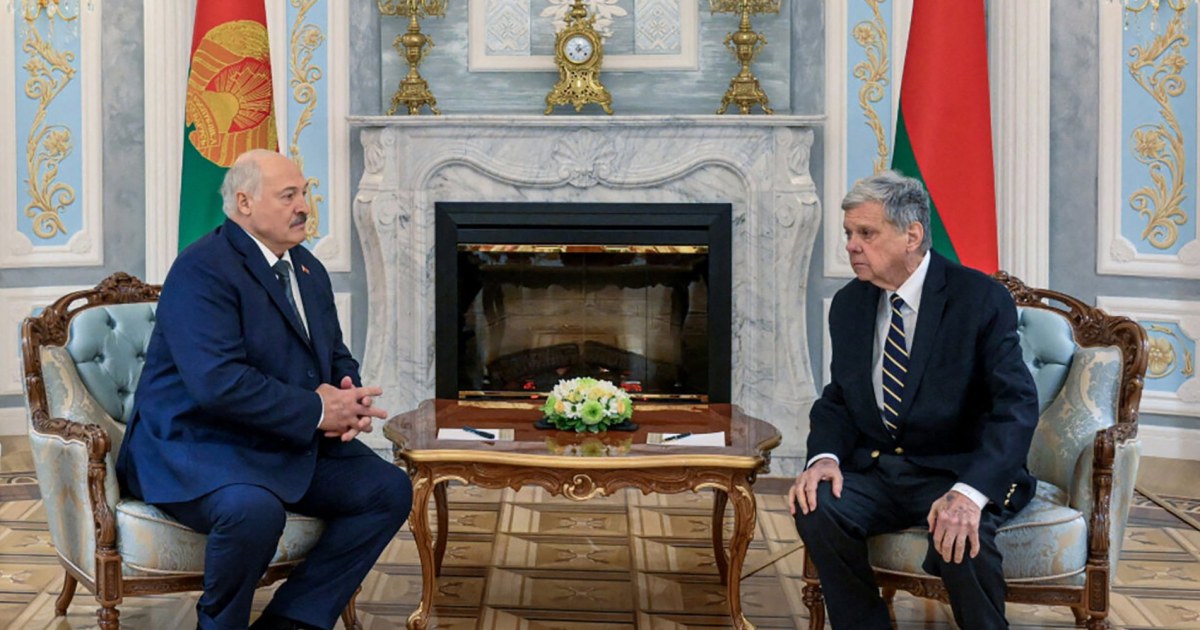
The backdrop of these negotiations is critical. With a population of 9.5 million, Belarus has known only Lukashenko’s authoritarian rule for over three decades. His government has faced consistent backlash from the West for cracking down on political dissent. John Coale, the U.S. special envoy for Belarus, characterized the discussions in Minsk as “very productive,” hinting at a cautious optimism about normalizing relations between the two nations.
Notable Freed Political Prisoners
The release of political figures like Ales Bialiatski and Maria Kolesnikova is a remarkable pivot in Belarus’s political landscape. Bialiatski, who founded the human rights organization Viasna, was awarded the Nobel Peace Prize in 2022 and was serving a 10-year sentence on charges widely viewed as politically motivated. Upon his release after 1,613 days, Bialiatski expressed surprise and relief, likening the experience to emerging from “icy water into a normal, warm room.” He remains committed to advocating for the hundreds of political prisoners still detained in Belarus.
Kolesnikova is equally significant in Belarusian politics. A central figure in the protests against Lukashenko’s regime in 2020, she became a powerful symbol of resistance when she thwarted an attempt to deport her by tearing up her passport. Her 11-year sentence for conspiracy to seize power marked her as one of the most prominent political prisoners, and her release represents a crucial moment for the opposition movement.
Others Released
Among other notable figures freed were Viktar Babaryka, another major opposition leader who was sentenced to 14 years, and several advocates from Viasna, including Uladzimir Labkovich and Maxim Znak. However, some reports point to confusion regarding the exact status of every released prisoner, emphasizing the chaotic and often opaque nature of political negotiations in Belarus.
Interestingly, many of the released prisoners were transported to Ukraine, with plans for others to be sent to Lithuania as diplomatic discussions continue. This cross-border aspect of the negotiations highlights the interconnected nature of Eastern European politics and human rights advocacy.
Lukashenko’s Motives
Lukashenko’s willingness to release prisoners appears to align with a broader strategy to ease international sanctions that have crippled Belarus’s economy. The country’s potash industry, previously a significant contributor to Belarus’s economy, has been severely impacted by U.S. and EU sanctions. Analysts suggest that these negotiations reflect Lukashenko’s desire to stabilize his regime and mitigate the economic fallout from these measures.
After a prior meeting between U.S. officials and Lukashenko, sanctions were eased in exchange for the release of political prisoners — an indication that the Belarusian leader is increasingly aware of the domestic and international pressures mounting against him. Tsikhanouskaya, a prominent opposition leader in exile, cautioned, however, that while the release of prisoners is welcome, it should not obscure the ongoing repression in Belarus or Lukashenko’s continued support for Russia in the Ukraine conflict.
Ongoing Challenges and Future Prospects
The landscape of Belarusian politics remains fraught with challenges. With sanctions targeting the economy and the ongoing human rights violations, there is skepticism about the depth and sincerity of Lukashenko’s recent overtures to the U.S. The comprehensive sanctions imposed by the West have taken a toll on industries such as potash, previously accounting for about 20% of global exports.
As this new chapter unfolds, both Belarus and the U.S. are at a critical juncture. The outcome of these diplomatic efforts could have long-term ramifications not only for U.S.-Belarus relations but also for the broader geopolitical dynamics of Eastern Europe. Observers are keenly watching how this interplay between prisoner releases and economic sanctions will shape the future of human rights and governance in Belarus.
Lastly, the situation is also layered with regional implications, particularly concerns from neighboring Lithuania, which is wary of the potential for further aggression from Belarus. The political landscape continues to evolve, and the pace at which these negotiations advance will likely dictate future relations in a perennially volatile region.



