

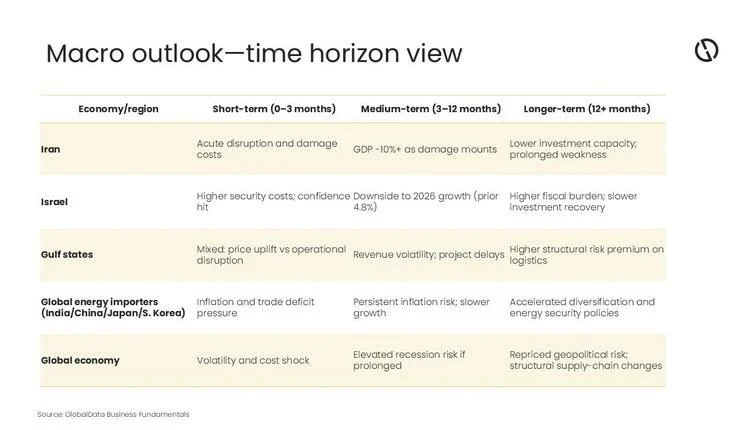
The ongoing conflict involving the US, Israel, and Iran is causing unprecedented disruptions to global energy markets, according to GlobalData. The effective closure of the Strait of Hormuz has resulted in oil prices surging past $110 per barrel, signalling a crisis that reaches far beyond the immediate region. This spike in prices is coupled with broader impacts across shipping, aviation, and trade sectors, raising concerns about the potential for a global recession and persistent inflation.
The conflict’s dimensions extend well beyond traditional military engagements. Over 5,000 strikes have been executed by the US and Israel against Iranian military infrastructure, which Iran has countered with retaliatory actions against US and Israeli interests in the Gulf region. These aggressive moves have heightened the threat level to vital infrastructure and trade routes, setting the stage for further disruption in international commerce.
The immediate fallout from the conflict is starkly visible in the energy and maritime sectors. The closure of the Strait of Hormuz, a critical chokepoint for global oil transportation, has left nearly 200 vessels stranded. The result? A dramatic rise in oil prices, which have jumped from approximately $70 to over $110 per barrel. Additionally, Asian liquefied natural gas (LNG) spot prices have more than doubled as the market grapples with reduced supply and heightened demand.
Ramnivas Mundada, Director of Companies and Economic Research at GlobalData, underscores the severity of the situation, stating that “corporate disruption is already severe across several sectors.” Major shipping firms are rerouting their vessels, and airlines are grounding flights due to airspace closures—decisions that ripple across the globe, causing delays and operational headaches in various industries.
The sudden escalation in conflict is also having significant effects on insurance and financial markets. War-risk insurance premiums for vessels have skyrocketed, increasing tenfold, which is tightening shipping capacity even further. In equity markets, volatility is palpable; for instance, the Dow Jones Industrial Average dropped over 400 points in a single trading session as investors reacted to the uncertainty gripping the markets.
Sectors that are particularly exposed to these disruptions include energy, shipping, aviation, and manufacturing supply chains. Each of these sectors faces not only operational challenges but also rising costs associated with rerouting and delays. Mundada warns that if the conflict continues to escalate, the probability of a global recession and persistent inflationary pressures will likely increase, posing significant risks to economies around the world.
This story was selected and published by a human editor, with content adapted from original press material using AI tools. Spot an error? Report it here.



