

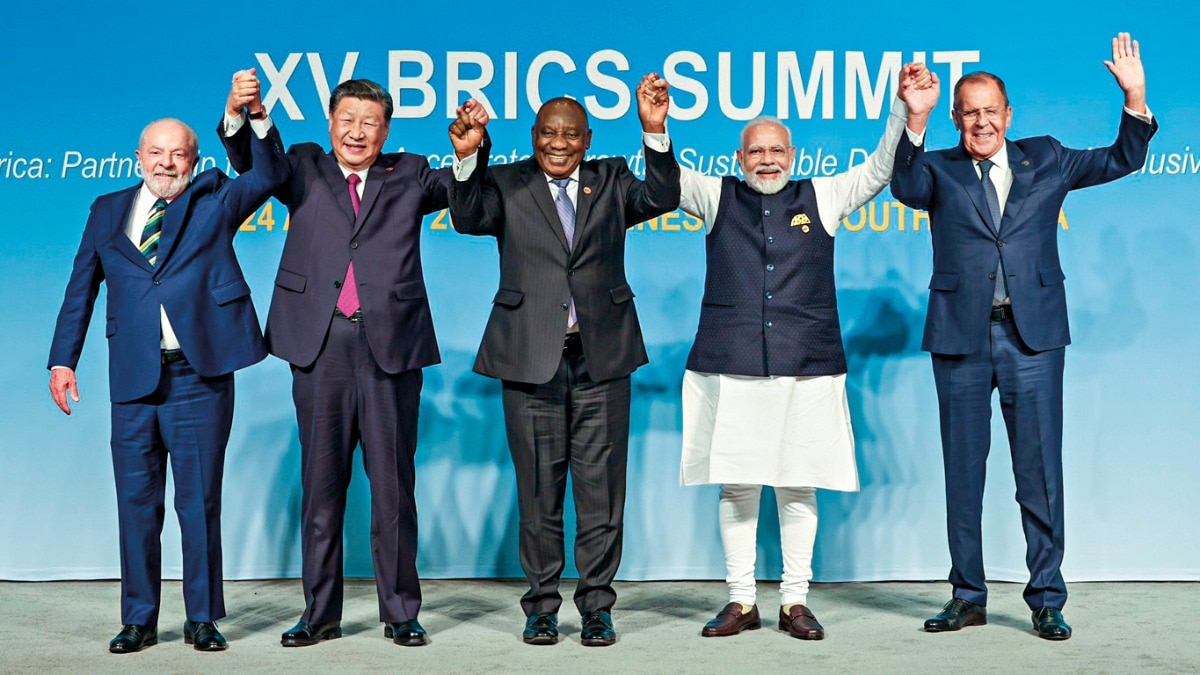
The Birth of BRIC: A Vision for the Future
In 2001, JP Morgan economist Jim O’Neill introduced the world to the acronym BRIC, encompassing Brazil, Russia, India, and China. At that time, these nations were emerging on the global stage, poised to reshape the world’s economic landscape substantially. O’Neill envisioned a collective that could rival the established G7, comprised of the world’s major advanced economies. The idea was bold: a shift towards a multipolar world, where economic power was not solely concentrated in the West.
The Evolution to BRICS
Fast forward to 2009, and the formal gathering of the BRIC nations marked a pivotal moment in international relations. The first summit brought together leaders from these four major economies to discuss collaboration and mutual interests. Not long after, South Africa joined the fray, transforming BRIC into BRICS. This inclusion symbolized not only the expansion of the group’s influence but also the necessity to incorporate voices from the African continent as part of a broader global narrative.
Ambitions and Aspirations
From its inception, BRICS aimed to create an alternative to Western-dominated financial institutions and governance structures. One of its central goals was to enhance the economic cooperation among its member states, fostering trade and investment that could potentially rival the traditional powers. The bloc sought to establish a development bank, later becoming known as the New Development Bank (NDB), with the goal of financing infrastructure and sustainable development projects in emerging economies.
Challenges on the Horizon
Despite its ambitious framework, BRICS has grappled with multiple challenges. Internal differences in political systems, economic priorities, and cultural contexts have made cohesive decision-making tricky. For instance, while China has emerged as an economic powerhouse within the group, Russia has struggled with international sanctions, significantly impacting its economic standing. Such disparities have raised questions about the effectiveness and unity of BRICS as a cohesive force in global governance.
The Financial Framework
Establishing a financial framework was a significant step toward achieving greater autonomy in global trade. Many BRICS members voiced their desire to rely less on Western financial institutions like the International Monetary Fund (IMF) and the World Bank. The creation of the Contingent Reserve Arrangement (CRA) was a move toward bolstering liquidity in times of economic crisis. However, critics point out that despite these initiatives, concrete outcomes have been limited, with many proposals remaining theoretical rather than actionable.
Criticisms and Observations
Fast forward two decades, and Jim O’Neill’s prediction resurfaces with renewed vigor. He labeled BRICS a "failed project," noting that many of the initial goals have not materialized into substantial achievements. Observers argue that while BRICS has facilitated dialogue among its members, it has struggled to translate these discussions into definitive actions or policies that would impact the global economic order significantly.
Looking Ahead
While the future of BRICS remains uncertain, discussions continue about its role in global governance. The bloc maintains its relevance partly due to the shifting dynamics of global power, particularly as emerging economies seek a greater stake in international dialogue. The challenges facing BRICS member states, including trade disputes, geopolitical tensions, and differing economic models, underscore the complexity of navigating cooperation among such diverse nations.
Conclusion: An Ongoing Dialogue
Though BRICS may not have achieved all its ambitious goals, the dialogue among its members continues. The framework established over the years offers a platform for collaboration in tackling shared challenges like climate change, security, and economic stability. As the group moves forward, its ability to adapt to the ever-evolving global landscape may ultimately determine whether it remains a significant player in international relations or fades into relative obscurity.



