

Robotic First Responders: The Future of Emergency Care with Spot
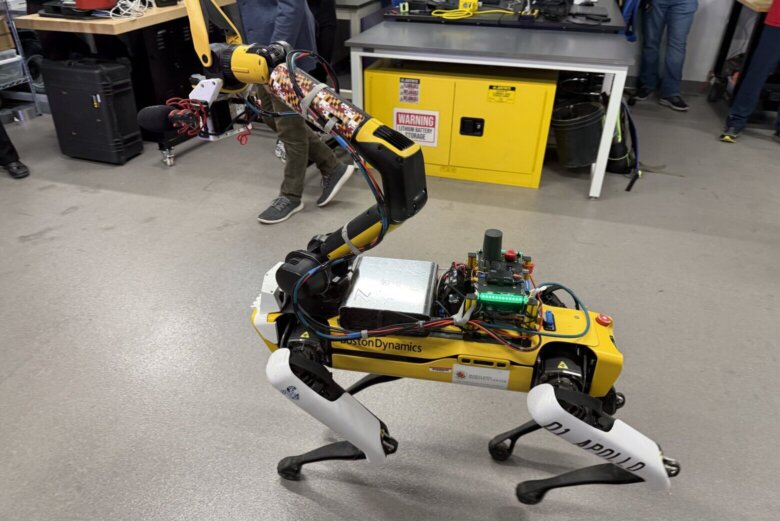
In an increasingly complex world where emergencies can arise from numerous sources—be it acts of violence, natural disasters, or military engagements—the need for efficient, immediate medical assessment is paramount. Reshaping the landscape of emergency response, researchers at the University of Maryland are pioneering a remarkable project: transforming a robotic dog, affectionately named Spot, into a first responder capable of assessing patients at mass casualty scenes.
The Role of Spot in Emergency Situations
Imagine a chaotic scene, overwhelmed with victims and too few medics. In such circumstances, time is of the essence. Spot is being developed to address these scenarios by not only navigating through difficult environments but also engaging with victims. This robotic innovation aims to provide critical assessments that can guide human medics in prioritizing care for those in greatest need.
Derek Paley, a professor in the Department of Aerospace Engineering and the Institute for Systems Research at the University of Maryland, highlighted Spot’s dual purpose—communication and assessment. As it approaches a simulated victim, the robot interacts with them: “I’m here to help. Can you tell me what happened?” It’s this conversational capability that could revolutionize initial triage in emergencies.
Advanced Technology at Work
At the heart of Spot’s impressive functionality is a finely-tuned artificial intelligence system, similar in nature to popular models like ChatGPT. Paley explains that the team has equipped Spot with a robust computer, enabling it to process complex data efficiently. This processing power is essential for analyzing vast amounts of information quickly, which is vital in high-stress environments.
Spot is adorned with advanced sensors that allow it to evaluate patient injuries accurately. For example, a depth camera generates a 3D representation of a casualty, constructing a comprehensive view of their condition. This visual data, combined with readings from other sensors, forms what the researchers call an "inference engine." This system synthesizes information from various sources to render precise assessments, ensuring that medical responders have a clear picture of each victim’s state.
A Coordinated Response with Drones and Robots
In emergencies, coordination across multiple platforms is crucial. The University of Maryland’s approach involves coupling Spot with aerial drones that survey the scene from above. These drones create a detailed map of the area, pinpointing potential victims based on real-time data transmission.
Once Spot receives input from the drone, it can navigate to each casualty autonomously, using its sophisticated array of cameras and sensors to provide essential information on vital signs and injury severity. Paley elaborates on this integration, stating, “The robots can explore, assess the number of casualties, and communicate vital information to medics in real time.”
Real-Time Data for Medics
To enhance the medics’ efficiency, all assessments conducted by Spot are preloaded onto a mobile interface that the medic wears. This system allows medics to access a visual representation of casualties, marked by the severity of their injuries. As they approach each victim, they are greeted with essential data already gathered by Spot, streamlining their decision-making process.
In the event of a critical injury, Spot can even alert medics audibly, urgently calling out, “Medic, medic!” This feature adds a human-like urgency to its operations, ensuring that no time is wasted in scenarios where seconds count.
Looking Ahead: The Future of Robotic First Responders
While the project remains in its testing phase, the potential for deploying this technology in real-world scenarios is promising. Paley is optimistic about the future, suggesting that with continued advancement, Spot could be operational within the next few years. His excitement reflects a growing acknowledgment of how technology can augment human capabilities, particularly in high-pressure situations.
The development of Spot symbolizes a dramatic shift in how we approach emergency response, pitting cutting-edge robotics and AI against the challenges faced by medics in chaotic settings. As this project progresses, it opens up new avenues for enhancing the safety and efficacy of first responders, ultimately aiming to save lives when every second is crucial.



