

Shanghai’s Economic Resilience Amid Global Scrutiny
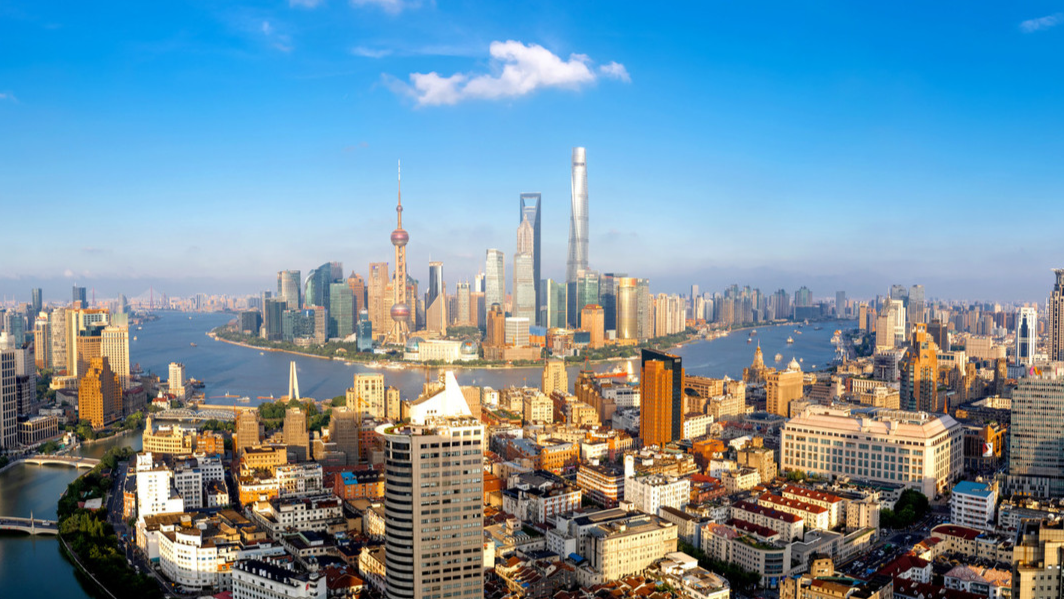
High-rises dominate the skyline on both sides of the Huangpu River in Shanghai. (GAO ERQIANG / CHINA DAILY)
Major international organizations like the World Bank and the International Monetary Fund have recently elevated their economic growth predictions for China, emphasizing the nation’s robust resilience in navigating challenges. Thanks to effective macroeconomic policies aimed at fostering consumption, China has reported a resilient 5.2% GDP growth in the first three quarters, positioning itself to meet its annual growth target of around 5%. Expectations indicate that the GDP will reach 140 trillion yuan ($19.87 trillion) this year, solidifying China’s status as the world’s second-largest economy.
However, misconceptions still surround China’s economic landscape. Critics often contend that the country over-relies on exporting while consuming too little, overlooking significant advances in technology that underpin its development.
Trade Dynamics: Shared Development vs. ‘Beggar-Thy-Neighbor’
Recent customs data highlighted a 3.6% year-on-year growth in China’s total goods imports and exports during the first 11 months of 2025. While some criticize the nation for its export-driven growth model and its effects on foreign industries, many economists argue that such claims misrepresent market principles.
Economic Competition and Consumer Choice
According to Zhang Qunzi, vice dean at Shandong University, the market economy thrives on high-quality and competitively priced goods. His insights suggest that trade protectionism—restricting markets due to fears of stronger production capabilities—only stymies global economic progress.
Moreover, Chinese products—ranging from daily necessities to high-tech devices—have enhanced consumer choices globally. Studies from the US National Bureau of Economic Research credit China’s productivity growth for increasing welfare in the US by driving down consumer prices.
Contrary to claims of a “mercantilist determination to sell but not to buy,” China has held the title of the world’s second-largest importer for 16 years, with imports projected to exceed $15 trillion in the 14th Five-Year Plan period (2021-2025). The author, Chen Hongna, emphasizes a balanced approach in the formulation of the upcoming 15th Five-Year Plan (2026-2030), underlining China’s commitment to shared trade opportunities.
Consumption Trends: Upgrade vs. ‘Consumption Downgrade’
Despite narratives suggesting a “consumption downgrade” in China, data indicates ongoing growth in consumer spending. The initial 11 months of this year saw retail sales of consumer goods expand by 4% year-on-year, with service consumption outpacing this growth.
Shifts in Consumer Behavior
Researcher Fan Yubo from the Shandong Academy of Social Sciences asserts that rather than a downturn, China’s consumption patterns are evolving. While traditional luxury purchases may be waning, demand for new energy vehicles, smart devices, and cultural experiences is on the rise. The consumer base is becoming more discerning, focusing not just on brands but also on product quality and cost-effectiveness.
Experts, including Bruno Lannes from Bain & Company, note that savvy consumer behavior is reshaping market dynamics. The forthcoming Central Economic Work Conference indicates that expanding domestic demand will take precedence in China’s economic strategies, emphasizing the need to elevate living standards and consumer spending.
Competition and Involution: Growing Pains vs. Critiques of the “China Model”
In recent discussions, the term “involution” has emerged to describe intense competition leading to diminishing returns in certain sectors. Some critics have labeled involution as an intrinsic flaw of the China model. However, many experts argue this phenomenon is simply a byproduct of competitive markets.
Addressing Involution Through Regulatory Measures
To mitigate the adverse effects of involution, the Chinese government has implemented multi-faceted regulatory measures. These include controlling capacity in saturated industries and adjusting pricing strategies for emerging technologies. Preliminary outcomes suggest improvements in profitability among major firms, with the producer price index showing positive growth.
Zhang from Shandong University believes that such competitive dynamics are a natural outcome of market economies. The comprehensive regulatory approach indicates the Chinese government’s proactive stance in addressing involution, ensuring economic stability while fostering competition.
Innovation Landscape: Powerhouse vs. the “Fat Tech Dragon”
China’s technological advancements have garnered international attention this year, spanning artificial intelligence to electric vehicles. Critics often dismiss this progress as mere hype but the tangible results tell a different story.
Technological Growth Statistics
Innovation in China is vibrant, evidenced by a 9.2% growth in the high-tech manufacturing sector from January to November 2025. Additionally, industrial robots and integrated circuits have experienced dramatic increases in production rates.
Government data has indicated that China’s small and medium-sized “little giant” firms are also thriving, with sales revenue surging by 8.2% in the first three quarters of 2025. Furthermore, international observers note China’s climb in global innovation rankings, now positioned 10th according to the World Intellectual Property Organization.
Summary of China’s Economic Outlook
In each of these areas—trade dynamics, consumer behavior, competition, and innovation—China is navigating a complex interplay of growth while addressing external critiques. The foundations laid in recent years indicate a multifaceted approach to economic resilience that continues to evolve against changing global landscapes.
From bolstering its consumer market to reinforcing its position in global trade, China remains a focal point of discussion in the international economic arena, one that carries significant implications for the broader global economy.



