

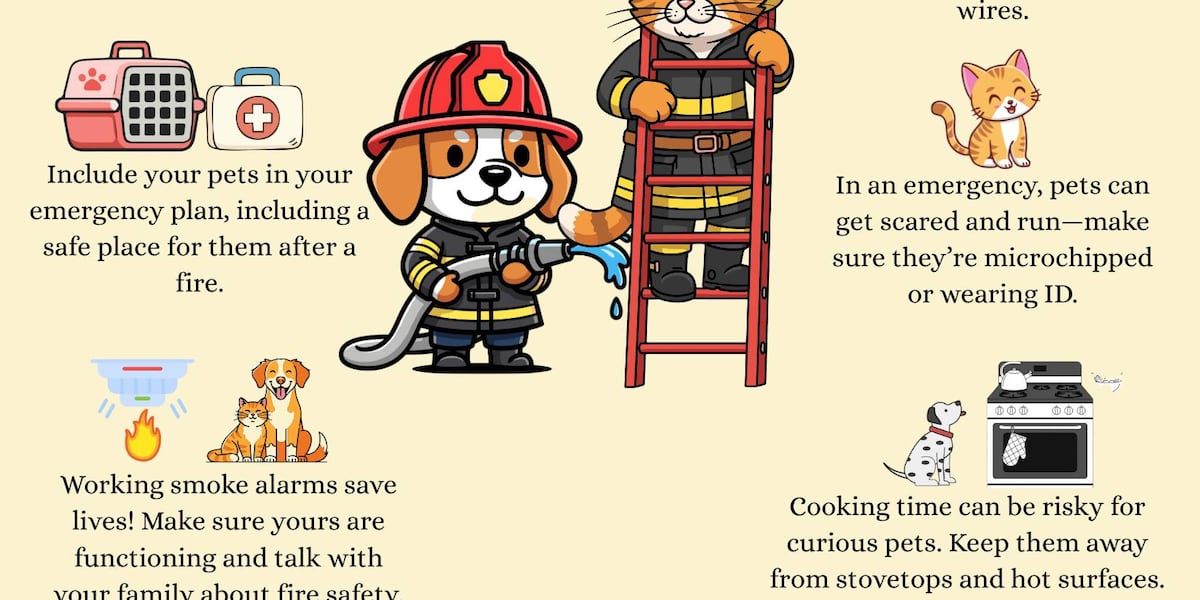
Keeping Your Pets Safe in Case of a Fire: Essential Tips from the Evansville Fire Department
In the heart of Evansville, Indiana, the local Fire Department has issued a heartfelt reminder aimed at pet owners. Fires can be unpredictable and devastating, and in many cases, they can lead to the heartbreaking loss of beloved pets. With fire-related incidents occurring more frequently, ensuring the safety and well-being of our furry companions is more crucial than ever.
Understanding the Risks
The Evansville Fire Department (EFD) has reported an increase in fires that have sadly resulted in the loss of pets. Pets, by their curious nature, often find themselves in precarious situations, especially in environments filled with open flames and heat sources. Awareness and preparation can make a substantial difference in ensuring pets stay safe during emergencies.
Practical Fire Prevention Tips
To help pet owners take proactive measures, the EFD has put together a list of fire prevention tips that everyone should consider:
-
Keep Pets Away from Open Flames and Heat Sources
Pets are naturally curious; therefore, it’s vital to ensure they are kept at a safe distance from open flames, space heaters, and stovetops. Accidental burns or fires can easily happen if pets get too close. -
Extinguish Candles Before Leaving the Room
It’s easy to forget a lit candle when rushing out. However, it only takes a moment for a candle to ignite nearby materials. Always extinguish candles before leaving any room to prevent potential fire hazards. -
Avoid Using Extension Cords and Chewed Electrical Cords
Exposed wires can be tempting for pets, especially if they are prone to chewing. Ensure that all electrical cords are secure and replace any frayed or damaged cords immediately to avoid electrical fires. -
Secure Curious Pets When Cooking or Using Heat Sources
Cooking times can be chaotic, especially with pets roaming around. Consider securing them in a different room or using baby gates to keep them away from the kitchen while you’re cooking. - Keep Lighters and Matches Out of Reach
Just like children, pets may be curious about matches and lighters. Store these items in high, inaccessible places to reduce the risk of an accidental ignition.
Emergency Preparedness for Pets
In addition to prevention, having a plan for emergencies is essential. Here are some tips to help ensure a smooth evacuation with your pets:
-
Install Working Fire Alarms: Ensure that fire alarms are functional on every level of your home. Regularly test them to confirm they are working correctly.
-
Have Leashes, Carriers, or Crates Near Exits: In case of an emergency, keep pets’ leashes, carriers, or crates easily accessible near your home exits, allowing for a swift evacuation.
-
Know Where Your Pets Usually Hide: Familiarize yourself with hiding spots your pets may choose, like under the bed or in closets. This knowledge can be invaluable during a chaotic evacuation.
- Consider a Sign or Sticker: Place a sign or sticker on your front door or window indicating that pets are inside. This simple action can inform firefighters about your pets’ presence, aiding their rescue efforts.
What to Do During a Fire
If a fire occurs, the EFD emphasizes the importance of acting quickly and safely. If you can do so safely, bring your pets along with you while exiting the home. However, never re-enter a burning building for any reason, including retrieving a pet. Your safety is paramount.
Immediately inform firefighters about the presence of any pets inside the building. They are trained and committed to rescuing animals when it is safe for them to do so.
Conclusion: The Importance of Prevention and Awareness
While the risks of fire can be alarming, taking the right steps can significantly enhance the safety and well-being of our beloved pets. The Evansville Fire Department’s guidance is a reminder that fire safety is not just about protecting ourselves but also extending that protection to our furry family members. By taking preventative measures and being prepared, we can secure the safety of our pets in emergencies.



