

The Aviary Wonders of Pasadena: A Closer Look at Urban Parrots
A Tropical Awakening in the City
A morning mist envelops the palm trees as the sun peeks through the haze in Pasadena, California. This tranquil scene seems plucked from a tropical paradise, a striking contrast to the bustling urban landscape of northeast Los Angeles County. Amidst the chatter of birds and the roar of traffic, Diego Blanco, a research assistant at Occidental College’s Moore Laboratory of Zoology, captures the essence of this vibrant environment. “It feels parrot-y,” he reflects, nodding toward the lush greenery that surrounds us, which includes tall trees and berry-laden bushes.
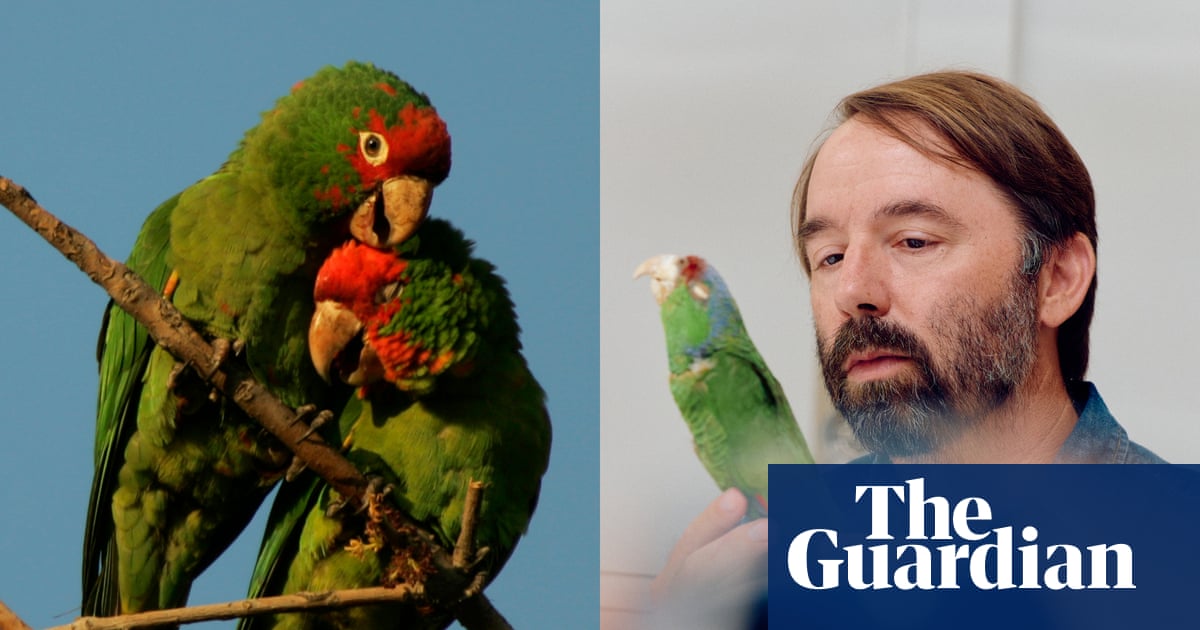
With Blanco is John McCormack, the lab’s director, who shares a curious quest: to find Los Angeles’s loudest, yet sometimes elusive, residents—free-flying parrots. The most common among them is the bright green red-crowned parrot, easily identifiable by the striking red feathers on its head. However, the urban landscape is also home to other species such as the lilac-crowned parrot, yellow-crowned parrot, and Nanday parakeet, creating a diverse and colorful avian community.
The Chase Begins
“You’d be surprised sometimes,” McCormack notes as we scan the skies. “They can be right above you, and you don’t even see them.” Instead, we often hear them first—squawking from the treetops. Suddenly, a burst of excitement erupts when Diego points upward, exclaiming, “Oh oh oh, those are parrots!” Sure enough, a group of six vibrant green parrots glides overhead, their laughter trailing in their wake.
The subsequent chase across the urban expanse of Pasadena reveals a significant advantage for the birds—their ability to soar above the city streets while we traipse below, attempting to keep up. It’s clear that in this city, these feathered friends hold the upper hand.
Ravens of the Urban Jungle
These parrots, with their vivid plumage and boisterous voices, are indeed the quintessential Angelenos. Originating from Mexico and South America, their introduction to Los Angeles began with the pet trade that peaked in the 1970s. They were often purchased by celebrities until many escaped or were released into the wild. Stories are abound, including that of a fire at a pet store where firefighters opened cages to rescue the birds. What followed was a transformation as these exotic creatures adapted to city life, creating thriving populations that now number in the thousands.
In fact, certain neighborhoods have become hotspots for these urban aviators. You can find flocks perched atop palm trees in Pasadena or congregating on telephone poles in Malibu. Interestingly, these parrots have few natural predators in California and do not compete with native birds for food due to their unique diet, which mainly consists of ornamental plants imported to the area. This unique niche means they are not classified as an invasive species, a fortunate development for both the birds and local ecosystems.
Resilience and Adaptation
Scientific attention has shifted toward studying these successful newcomers. Researchers seek to understand the adaptability and resilience of various parrot species as they evolve and interbreed. Their findings could yield insights transferable to cities around the world facing similar challenges of urban wildlife integration.
Blanco summarizes the importance of this study: “You’re never going to get all the things back to where they’re originally supposed to be. So, it’s about figuring out what fits in well here and what kind of new ecosystems emerge from this combination.”
Unraveling Parrot Mysteries
Initially, McCormack’s focus lay on native species of birds. The colorful parrots, viewed as escaped pets, were not considered a serious subject of study until a peculiar incident thrust them into the spotlight. A parrot collided with a library window at Occidental College and died on impact, offering a rare opportunity for scientific examination.
Upon inspection, McCormack and his team noticed the bird bore hybrid traits from two species—the red-crowned and lilac-crowned parrots. With access to a historical collection of Mexican bird specimens dating back a century, McCormack began comparing these urban hybrids to their historical counterparts, leading to a deeper understanding of how these birds mix and adapt in Los Angeles.
Clues to Survival
At the Moore laboratory, McCormack opens drawers filled with specimens collected from Mexico in the 1930s. The vibrant colors of these specimens—rich greens mingling with purples and reds—contrast starkly with the modern urban parrots. He holds up a vibrant bird with a blend of traits that illustrates the complexity of hybridization now occurring in the city.
Both red-crowned and lilac-crowned parrots have found themselves cohabiting in Los Angeles, a situation that would be impossible in their native habitats due to millions of years of evolutionary separation. As they adapt to urban life, the researchers are eager to investigate how their biology is shifting, which may hold keys to conservation efforts not just in LA but also back in their original homes.
The Future of Urban Parrots
The convergence of these species is not merely a biological marvel but offers potential solutions for conservationists grappling with declining populations in their native ranges. While the parrots thrive in urban areas, the population in Mexico faces endangerment due to habitat loss and illegal trapping. Some scientists find hope in the possibility that Los Angeles’s flourishing parrot populations could help repopulate areas in Mexico, thus creating a new potential for these birds’ survival.
Interestingly, Los Angeles hosts a flourishing variety of urban wildlife. From Nanday parakeets in the Santa Monica Mountains, which have adapted to new habitats, to avian communities found across various neighborhoods, the parrot populations continue to broaden their influence.
The Love-Hate Relationship
Despite their thriving numbers, the vibrant parrots elicit mixed feelings among Angelenos. Denys Hemen, a facility manager at the Audubon Center in Debs Park, explains, “Some people think they’re a little noisy. During the day, you might hear one or two chattering somewhere in the tree. I personally love them.” Indeed, their raucous calls echo through the city air, a sound that many find charming yet intrusive.
Researchers like Janel Ortiz are investigating more than just their social dynamics; she is exploring their nesting and roosting behaviors, pondering whether their chosen palm tree cavities will continue to be viable as these trees decline. Can they adapt to new nesting sites if palm trees become scarce?
Conservation Challenges and Community Interest
While their numbers are robust, the parrots face challenges, particularly since they lack protective status under California law. Everyday threats, such as people attempting to capture them, highlight a precarious existence for these urban birds. Nonetheless, they have recently been included in the California Bird Records Committee, joining the ranks of species that, while non-native, have integrated into the local ecosystems over the years.
There is a communal call for sanctuary for these cherished birds to ensure that they remain a vibrant part of Los Angeles’s urban tapestry. Indeed, their presence has become a symbol of resilience, a colorful reminder that even amid the urban sprawl, a piece of the tropics remains alive and well, inspiring admiration and wonder in the hearts of many Angelenos.
With every flock that soars above, each squawk echoing through the palm trees, the parrots of Los Angeles continue to weave their story—a narrative of adaptation, survival, and the tropical imagination that they invoke within this sprawling urban landscape.



