

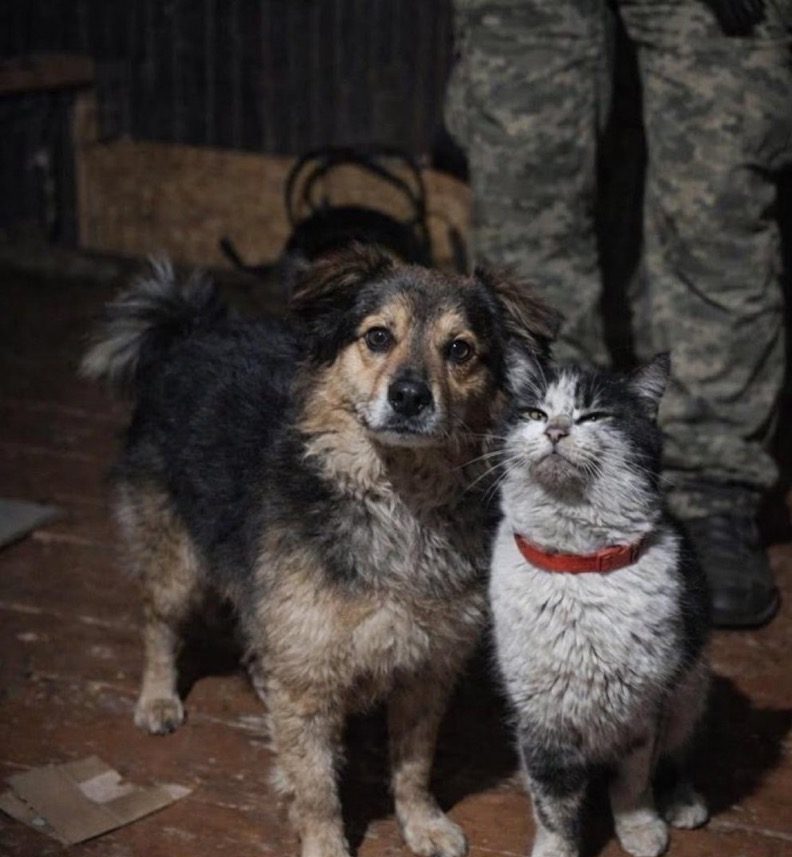
On a harrowing morning in Ukraine, a woman stood at her doorway, torn between the impending danger and her love for her pet. Gripping a small bag and shaking with uncertainty, she watched as neighbors hastily fled to safety, leaving behind the sounds of artillery that drew closer by the minute. The choice she faced was heart-wrenching: leave everything she knew, or stay and risk it all for her loyal dog. This poignant scene encapsulates the essence of resilience in wartime, where the bonds between humans and animals become vital lifelines amid chaos.
Since the onset of the full-scale invasion, countless individuals across Ukraine have made similar sacrifices. They’ve cradled dogs and cats in their arms, stuffed rabbits into backpacks, and watched children clutch beloved pets as they crossed borders into uncertain territories. What may seem like a whimsical attachment often reveals much deeper emotional currents — fundamentally interconnected with human survival in times of terror.
It might appear irrational to prioritize an animal over one’s own safety, yet these decisions serve as a lifeline. They expose a critical truth about how civilians withstand prolonged periods of danger. Russia’s war is not just a physical assault; it is a deep strike on the very psychological fabric that holds society together. Understanding how Ukrainians maintain their emotional resilience provides insight not only into human endurance but also the future potential for recovery and strength.
Dr. Richard Mollica, affiliated with Harvard Medical School’s Program in Refugee Trauma, speaks on this phenomenon, emphasizing that during extreme situations like war, people can experience a kind of “psychic numbing.” This concept, coined by psycho-historian Robert Jay Lifton, elucidates how individuals, facing imminent danger, shut down their emotions to continue functioning. While this survival mechanism allows people to brave daily threats, it simultaneously erodes capacities for attachment and empathy — essential elements that underpin a healthy society.
When emotional responsiveness wanes, communities become vulnerable to despair and chaos. “You wake up in the morning consumed by the fear of death, and then your dog jumps on you, shows you love, and for that moment, you can live in the present,” Mollica explains. This tactile connection interrupts the numbing, restoring feelings in a way that is immediate and trustworthy.
Daily, these small yet profound interactions happen quietly across Ukraine: a cat snuggled against someone’s chest in a frigid apartment, a dog waiting patiently at the doorstep of a battered home, or a horse nuzzling a hand amidst the chaos of artillery fire. These animals are not mere companions; they play a critical role in helping civilians remain psychologically intact during prolonged stress.
The infrastructure that facilitates emotional resilience extends beyond human relationships; it includes veterinarians, animal shelters, and supply chains that support animal welfare. In war-torn regions, veterinarians step into perilous roles, treating animals pulled from rubble, caring for military dogs, and addressing cases of abandonment. They are on the frontline, yet they are also grappling with their own emotional and psychological burdens, facing unprecedented moral distress and exhaustion.
Dr. Mollica notes that the overwhelming pressure on these professionals can lead to severe burnout. If veterinary services decline or cease to function, the fallout is tragic: animals suffer, bonds weaken, and the emotional scaffolding that helps civilians endure deteriorates. This cycle of despair is not lost on adversarial forces; reports have emerged from liberated areas about deliberate cruelty towards animals by occupiers, undermining both morale and humanity in communities striving to rebound.
To ensure the psychological endurance of its citizens, Ukraine must view veterinary services as integral to civil resilience. First, mobile veterinary units and emergency supply chains should be prioritized and provided in frontline areas. Moreover, mental health support for veterinarians is crucial — integrating dedicated programs that encompass peer support and trauma-informed care could sustain a critical workforce impacting civilian well-being.
Planning for reconstruction must also encompass the restoration of animal shelters and veterinary facilities alongside other essential infrastructures like schools and healthcare units. Consideration should be given to animal care as part of a larger commitment to societal stability during drawn-out conflicts. In so doing, international partners can solidify their support for Ukraine’s holistic recovery efforts.
As the conflict continues, it has become evident that the bonds formed between people and their animals hold much more significance than initially appears. Far from being tangential, these relationships are vital to how Ukrainians endure the ongoing challenges of war. Recognizing the essential role of animals in these harrowing circumstances amplifies our understanding of resilience, survival, and the facets of humanity that thrive even in the darkest times.
Mitzi Perdue is a Senior Fellow at the Center for European Policy Analysis (CEPA) and Co-Founder of Mental Help Global.
Europe’s Edge is CEPA’s online journal covering critical topics on the foreign policy docket across Europe and North America. All opinions expressed on Europe’s Edge are those of the author alone and may not represent those of the institutions they represent or the Center for European Policy Analysis. CEPA maintains a strict intellectual independence policy across all its projects and publications.



