

The Rising Challenge of AI-Generated Fake News
In a world increasingly influenced by technology, the lines separating fact from fiction are becoming alarmingly blurred. Recent events in Las Vegas have underscored this trend, highlighting a troubling intersection of social media, artificial intelligence, and misinformation.
AI and the Illusion of Reality
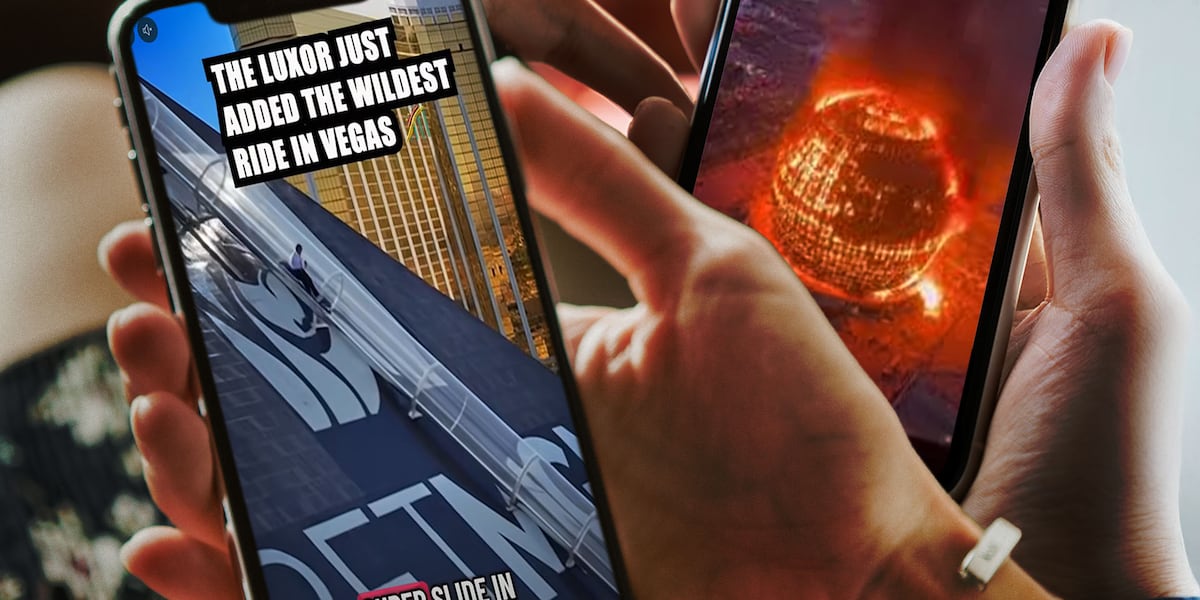
This week, two separate social media posts emerged showing one of Las Vegas’s most iconic venues enveloped in flames. But upon closer inspection, it was discovered that these videos were cleverly crafted fabrications, generated using artificial intelligence. The ability to create realistic visuals and narratives has progressed rapidly, putting a spotlight on how easily misinformation can spread.
Digital media expert Benjamin Morse, a professor at the University of Nevada, Las Vegas (UNLV), notes that AI-generated content often appears “a little too clean” or “perfect” when juxtaposed with authentic news coverage. This characteristic can complicate our ability to discern real news from digitally fabricated stories.
The Importance of Critical Thinking
Given the sophistication of such technology, Morse emphasizes the necessity of critical thinking in evaluating news content online. When faced with sensational stories—especially those that invoke strong emotional responses—it’s vital to take a step back and assess the information critically.
He poses a compelling question: “If the Sphere was on fire, would I be hearing about it this way for the first time?” Such queries challenge readers to consider the credibility of the information presented to them. A healthy skepticism can act as a safeguard against falling prey to misinformation.
Verification Through Multiple Sources
Morse advocates for verifying information across multiple channels before forming an opinion or sharing content. In today’s fast-paced digital landscape, where headlines often dominate attention spans, taking time to confirm the legitimacy of news can be invaluable. “If you see something and you’re not verifying it in one or two other places, you’re going to be in trouble,” he warns.
This emphasis on verification dovetails with the broader trend of instant gratification in information consumption—a “one-click culture” where speed often trumps accuracy. Morse urges his audience to resist this impulse, suggesting they pause to assess the surrounding context of the news before reacting or sharing.
Practical Tools for Detection
For those wishing to navigate this complex landscape, several strategies can assist in identifying fake AI-generated news posts. While some content may be explicitly labeled as fabricated, the majority will not provide such clear warnings.
Morse recommends checking the comments section of posts for insights from other users who might have detected inaccuracies. Engaging in web searches to verify the legitimacy of the outlet reporting the news can also provide crucial context. Additionally, cross-referencing the information with multiple reputable sources helps build a more comprehensive understanding of the narrative at hand.
Context Is Key
In summarizing the essentials of navigating the digital information maze, Morse highlights the importance of context. Understanding the broader implications and background of a story can drastically change how one perceives its validity. Taking the time to analyze content not only enriches our understanding but also strengthens our ability to engage with the news critically.
As the landscape of information continues to evolve, employing critical thinking, practicing diligent verification, and seeking context will be crucial in our personal battles against misinformation. By fostering these habits, we can better equip ourselves to discern fact from fiction in an age dominated by rapidly advancing technologies.



