

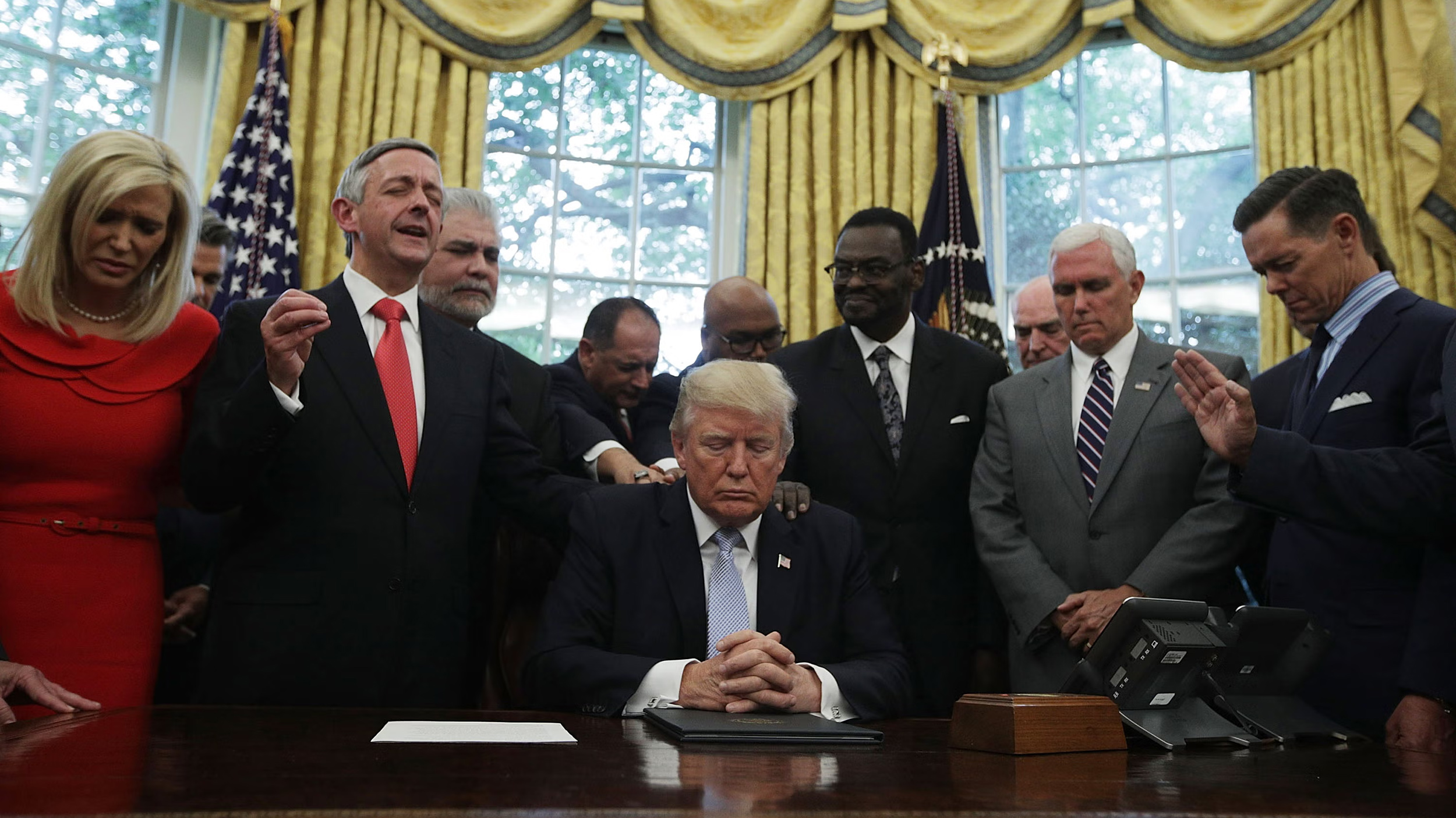
The United States: A Secular Democracy or a Moralized Conflict Engine?
Abstract
The United States has always presented itself as a secular liberal democracy grounded in the separation of religion and state. However, throughout its modern history, American wartime rhetoric has often incorporated moral and religious language that frames conflicts in ideological or theological terms. The 2026 US-Israeli war on Iran provides a contemporary case through which to examine this contradiction. This analysis delves into United States political and military discourse, revealing a persistent tension between its formal commitment to secularism and its reliance on religious narratives to justify military action. By examining the Iran conflict alongside earlier wars, we show that this pattern is structural rather than incidental. While defenders argue that such rhetoric is symbolic or limited to individuals, the evidence suggests it reflects a deeper inconsistency that undermines the US claim of pure secularism while contributing to the moral escalation of global conflicts.
Introduction
The United States has long defined itself as a secular political entity where religion and state authority are formally distinct. This identity is enshrined in constitutional law and emphasized in both domestic and international dialogues. However, during wartime, this secular self-representation is frequently tested. Political and military rhetoric often shifts from secular justification to moral and, at times, explicitly religious framing.
The 2026 conflict between the US and Iran brings this contradiction into sharp focus. Official narratives emphasize strategic concerns such as nuclear nonproliferation and regional stability, yet credible reports have surfaced indicating that some within US political and military frameworks invoke religious language, linking the conflict to divine purpose and apocalyptic struggles. This raises an essential question: can a state that claims secular neutrality coherently engage in quasi-religious discourse surrounding warfare?
The 2026 Iran War: Strategic Justifications and Religious Undercurrents
The 2026 escalation between the United States and Iran was characterized by coordinated military strikes, officially justified on the grounds that Iran sponsors terrorism globally and refuses to abandon nuclear ambitions. While US rhetoric has centered on conventional military strategy—deterrence, national security, and regional stability—this secular narrative has been accompanied by a troubling parallel discourse introducing religious elements.
Reports suggest that US military personnel encountered rhetoric linking the conflict to divine plans or biblical prophecies. Allegations around words like "Armageddon" being invoked within military contexts raise critical concerns regarding the appropriateness of such language in a formally secular institution. Investigations into whether military leaders frame the war in religious terms have been pursued by members of Congress, signifying the seriousness of the matter. This duality—secular justification alongside religious rhetoric—reveals a fundamental contradiction in how the United States presents its military actions.
A Pattern of Moralized Warfare
The intertwining of moral and religious rhetoric with US wartime discourse is not unique to the 2026 war on Iran; rather, it resonates with a historical pattern. During the Cold War, US leaders often depicted the ideological clash with the Soviet Union as a battle between a morally upright free world and godless communism, effectively turning a geopolitical rivalry into a moral crusade that amplified domestic support.
Post-9/11, the War on Terror similarly blurred lines between strategic necessity and moral duty. President George W. Bush’s reference to a "crusade," although later backtracked, exemplified how rapidly religious language can permeate official discourse. The Iraq War reinforced this pattern, with narratives emphasizing moral obligation and the fight against evil. Scholarly analyses indicate that such rhetoric is deeply embedded in American political culture.
The notion of civil religion in America positions national identity closely tied with religious symbolism. In this context, religious language in wartime discourse is not an anomaly but an integral component of political rhetoric, evidencing that the Iran conflict aligns with a consistent historical trajectory in the portrayal of US wars.
Structural Contradiction and Political Instrumentalization
The recurrence of religious rhetoric amid a formally secular state poses profound questions. This phenomenon cannot merely be seen as symbolic or coincidental; rather, it reveals a structural contradiction in US political practice. Some suggest this signifies a deliberate strategy of political instrumentalization. Religious language mobilizes domestic audiences, simplifies complex geopolitical scenarios, and frames conflicts in morally appealing terms. Casting wars as battles between good and evil generates public support while quelling dissent.
Yet, this strategic approach does not eliminate the inherent contradiction at play. Regularly invoking religious narratives undermines the credibility of the US’s claim to secular governance. A state that employs moral and religious frameworks to justify military action struggles to maintain a position of purely rational action. When interstate conflicts are narrated in these quasi-religious ways, they evolve from negotiable disputes into existential battles, making diplomatic resolutions far more complicated.
Moreover, intertwining secular policy with religious rhetoric casts ambiguity over the actual motivations driving US foreign policy. It raises questions about whether strategic choices are influenced by material interests or ideological beliefs that go unacknowledged. Consequently, the duality of operating as a secular state while routinely drawing on religious narratives weakens the coherence of the US’s political identity and complicates its international standing.
The Other Argument
Despite this discourse analysis, some posit that the US remains fundamentally secular in its institutional functions. The Constitution explicitly prohibits the establishment of religion, maintaining that official policy regarding the Iran war is grounded in strategic assessments rather than theological considerations. Additionally, a significant portion of the reported religious rhetoric emerges from individual perspectives rather than formal doctrines.
Some argue that the presence of such rhetoric is reflective of individual beliefs rather than indicative of broader institutional policy. Moreover, other actors involved in the Iran conflict, such as Iran itself, also resort to religious framing, suggesting a more widespread phenomenon rather than a uniquely American contradiction.
While these arguments offer valuable perspectives, they do not entirely address the core issue. The repetitive integration of religious language in military and political discourse suggests a meaningfully influential role in how conflicts are framed and justified within American politics. This enduring pattern points to a deeply ingrained aspect of American political culture rather than mere incidental occurrences.
As we navigate through this complex narrative of US foreign policy, it becomes evident that the intersection of secularism and religious rhetoric raises crucial questions about the very identity of the United States in both domestic and international realms. Understanding this duality is fundamental to grasping the broader implications of American military engagements and their moral justifications throughout history.