

The Power of Images in Immigration and Criminal Justice Policy
Framing the Narrative: A Historical Perspective
Throughout history, images have played a crucial role in shaping public perception and policy, especially in contexts involving power dynamics and societal control. From the stark photographs of detainees to the commanding visuals of military power, these images have been utilized to convey authority, instill fear, and communicate political messages. This has been particularly evident during the Trump administration, where detainment visuals became prominent tools in the national conversation on immigration and law enforcement.
Current Trends: Visuals as a Policy Tool
In recent years, the images showing people in custody—whether behind bars or in shackles—have taken center stage in government initiatives. This shift is not merely artistic but strategic, aiming to communicate a message of deterrence. Ads promoting Immigration and Customs Enforcement (ICE) efforts and social media posts from the White House reflect a calculated decision to frame immigration reform as a matter of national security. In these representations, individuals—often stripped of their identities, reduced to mere numbers or faces—become symbols of policy.
The Incident in El Salvador: A Case Study
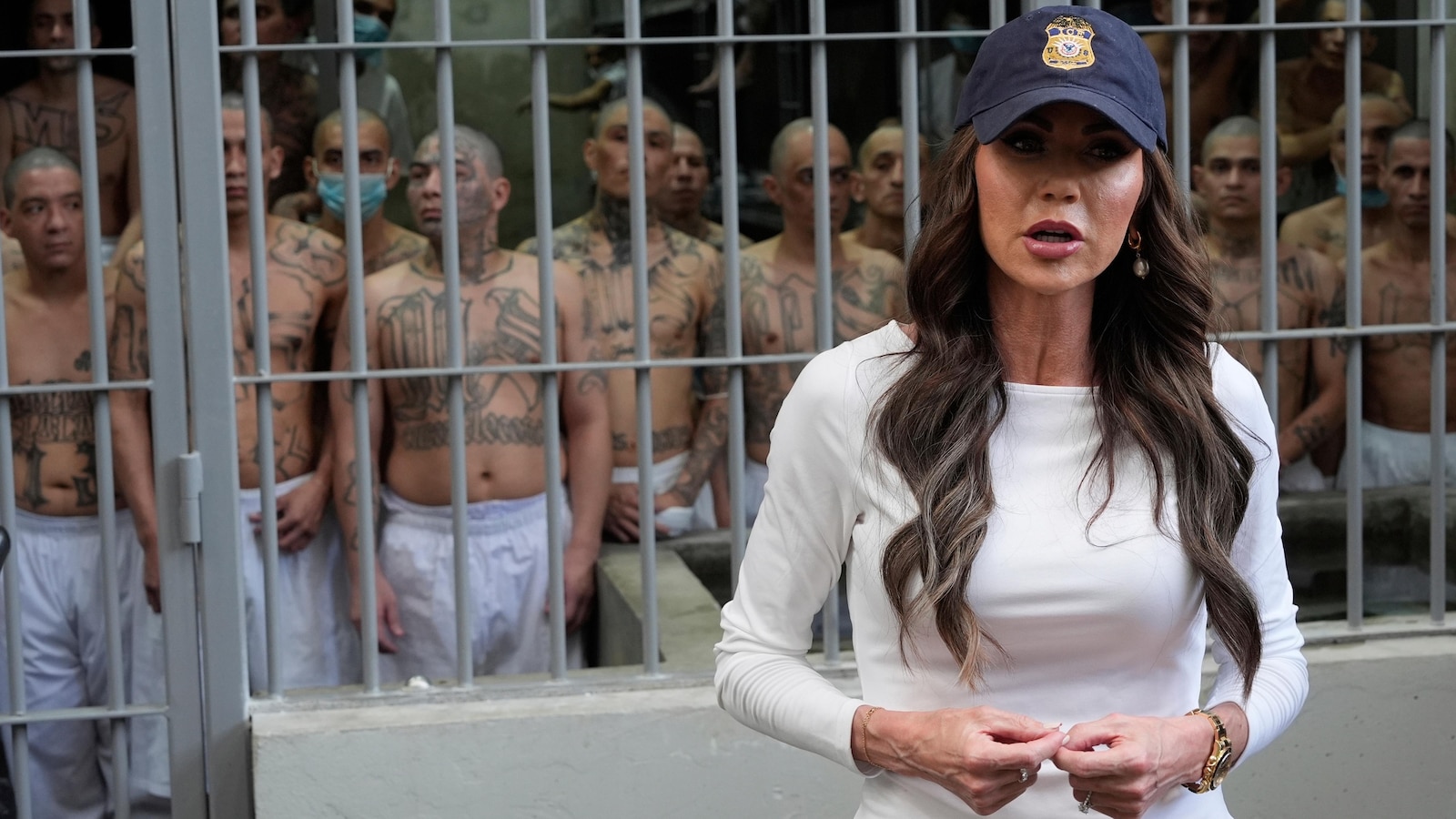
A vivid example of this phenomenon occurred earlier in the year when Kristi Noem, the Secretary of Homeland Security, visited a notorious Salvadoran prison. Photographs from this visit depicted rows of tattooed men in shackles, a powerful, if unsettling, visual meant to send a clear message to immigrants residing in the U.S.: "You could be next." Such imagery has sparked outrage, with critics labeling it as cruel propaganda that dehumanizes those already suffering.
Echoes of the Past: Historical Use of Criminal Imagery
The tactic of employing criminal imagery to express political strength is not novel; it has been a part of political campaigns and control strategies for over a century. Images of inmates working at Alcatraz or photographs from Mississippi’s Parchman Farm serve as reminders of how visual storytelling has historically been employed to enforce narratives of power. This long-standing trend underscores a pivotal point: showcasing images of detainees or criminals has consistently served to uphold the authority of the state.
Psychology of Visuals: How Imagery Resonates
Visuals possess a unique power; they often invoke emotions before they are processed intellectually. Renita Coleman, a journalism professor, notes that photography can affect our feelings and beliefs seemingly instantaneously. This emotional engagement complicates how individuals interpret these images. For some, visuals may reinforce the notion of “law and order,” while others may perceive them as dehumanizing representations of a flawed system. The inherent biases we hold influence our understanding of what we see, further complicating public discourse.
The Ethics of Representation: Consent and Authority
When it comes to representing the incarcerated, ethical considerations are paramount. Those in custody rarely have the agency to consent to being photographed, raising questions about exploitation. Tara Pixley, a journalist and educator, emphasizes the difference between permission from an authority figure and genuine consent from those being photographed. Individuals in custody often exist at the mercy of those in power; their images are used without consideration of their dignity or humanity.
Race, Class, and the Visual Rhetoric of Crime
The representation of detainees also intersects with broader sociopolitical issues, particularly race and class. Critics argue that prevalent depictions of inmates can perpetuate societal prejudices, feeding into a narrative that accepts harsher penalties for marginalized communities. Joseph Baker, a sociologist, highlights that entrenched biases often lead to a societal indifference toward the suffering of those who may not "look like" or "sound like" the majority. This complicity in viewing certain individuals as deserving of punishment ties conviction to identity, reinforcing systematic disparities.
Advocating for Change: Challenging the Status Quo
Organizations like the Vera Institute are working to combat these harmful narratives by advocating for the dignity and humanity of incarcerated individuals. Ed Chung, associated with the Vera Institute, emphasizes education and awareness as crucial elements in shifting the conversation surrounding crime and safety. By moving beyond political rhetoric and fostering a dialogue focused on compassion and understanding, advocates seek to change perceptions about the justice system and those entangled within it.
The Potential for Progress
Through initiatives aimed at educating public opinion and improving post-incarceration resources, advocates strive for systemic change. By encouraging a shift in narrative, the hope is to dismantle the high walls of bias and prejudice that have long governed perceptions of crime, safety, and justice. As society continues to grapple with these issues, the role of imagery will undoubtedly remain a critical factor in influencing both policy and public sentiment.
In navigating this complex landscape, it becomes increasingly important to recognize the influence of imagery, its historical context, and the ethical implications of representation in the realm of criminal justice and immigration reform. The conversation about how we depict and understand those in custody necessitates both sensitivity and awareness, recognizing the humanity behind each image.



