

Navigating the Current Landscape of U.S. Stock Markets: Insights and Analysis
Market Movements Amidst Economic Updates
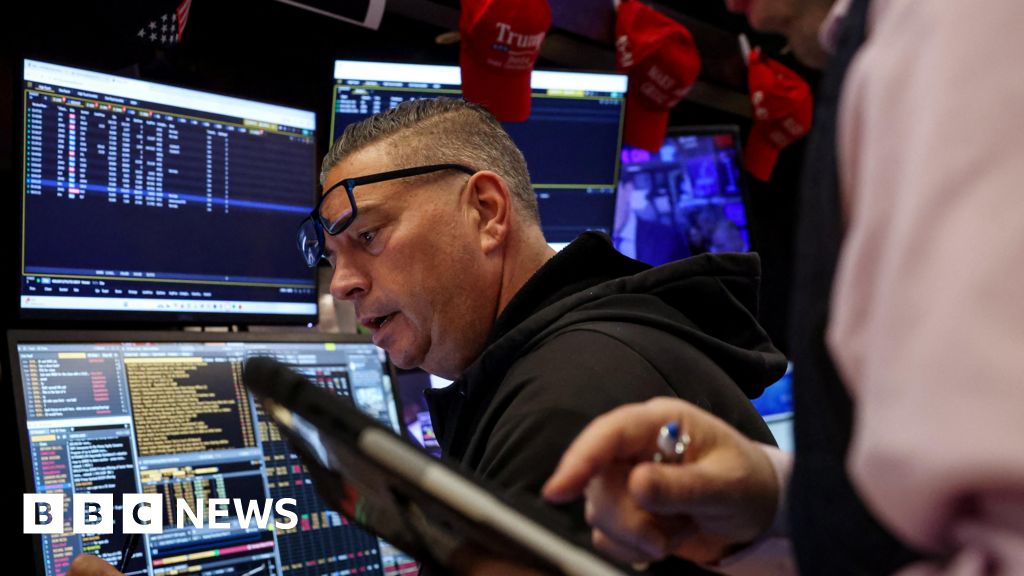
The recent backdrop of the U.S. stock markets has been one of volatility, even as promising business news surfaced. After a series of positive reports highlighting strong sales figures from industry giants like Nvidia and Walmart, many expected an upward shift in market sentiment. Yet, the reality starkly contrasted those hopes. On Thursday, the key U.S. stock indexes resumed their descent, a troubling turn after an initial morning rally. The S&P 500 concluded the day down 1.5%, while the Dow Jones Industrial Average dipped by 0.8%, and the Nasdaq lost over 2%.
This unsettling trend did not stop at U.S. shores; Asian markets echoed similar declines, reflecting a broader sentiment of investor caution.
AI Chip Sales and Retail Giants
Nvidia’s robust sales, attributed to the surging demand for artificial intelligence (AI) chips, was anticipated to boost market confidence. AI is profoundly transforming industries, and Nvidia stands at the forefront, capitalizing on this trend. Similarly, Walmart’s strong performance was indicative of consumer resilience, suggesting a vibrant retail sector. However, these their successes contributed little to temper investor worries.
The unsettling question remains: why did the expected market lift fail to materialize?
Analyzing Investor Sentiment
James Stanley, a senior analyst at StoneX, captured the sentiment succinctly, noting that the market’s reaction deviated significantly from what should have occurred in light of the positive news. This divergence leads to the critical inquiry about the underlying dynamics at play in the markets today. The overall sense of trepidation among investors suggests that concerns may run deeper than immediate business performance.
International Market Reactions
The reverberations of the U.S. market trends were felt globally. In Japan, the Nikkei 225 index saw a dip of over 2.5%, with influential companies like Softbank losing more than 10% of their value. South Korea experienced a rough session as well, with the Kospi index falling around 4%, affected by significant drops in shares of tech giants such as SK Hynix and Samsung. Hong Kong’s Hang Seng index also reflected this cautious outlook, falling by almost 2%.
Even Bitcoin, a market often viewed as uncorrelated with traditional equities, fell below $90,000, the lowest point seen since April, signaling widespread concern among investors.
The AI Bubble: Recognizing Risks
Despite the rosy picture painted by Nvidia’s performance, analysts found themselves grappling with the looming specter of an AI bubble. Fears about inflated valuations, especially in the tech sector, have grown, compounding existing anxieties about the overall health of the economy. Jensen Huang, Nvidia’s CEO, attempted to allay these fears, arguing that the demand for AI products remains robust. However, the anxieties on Wall Street persisted, exacerbated by warnings from leaders like Alphabet’s Sundar Pichai regarding the “irrationality” in the current AI boom.
As the debate about valuation continues, analysts from Oxford Economics provide a glimmer of hope, suggesting that recent tech market corrections may reflect a natural adjustment rather than an imminent crisis. Still, they caution that this could also signal broader volatility ahead.
Interest Rates and Inflation: A Balancing Act
Investors are grappling with two pressing questions: How will inflation trends affect interest rates, and what will the Federal Reserve’s response be as uncertainty cloaks economic projections? Several economic indicators are being closely monitored, especially after a delay resulting from the recent U.S. government shutdown.
The S&P 500 has already declined over 4% this month, potentially signaling its worst monthly performance since March. With investors keenly aware of the Fed’s deliberations, the anticipation surrounding upcoming inflation data further fuels market foreboding.
Job Reports and Economic Uncertainty
The most recent jobs report added layers of complexity to the market narrative. With 119,000 jobs added in September—far exceeding analysts’ expectations—the unemployment rate unexpectedly ticked up to 4.4%. This mixed signal complicates projections regarding the Fed’s trajectory for interest rate cuts, further entrenching uncertainty in financial markets.
Amidst these fluctuations, industry leaders emphasize the need for stable economic pillars, such as sustained AI adoption and lower interest rates, to support stock valuations in the long term. However, the potential for volatility remains, as increasing fears regarding AI valuations and inflation prospects loom large.
Investor Strategies in Uncertain Times
As market volatility becomes a common theme, investor strategies may require recalibration. With a market often viewed as being "priced for perfection," the need for positive external catalysts to sustain momentum is critical. Analysts warn that doubts surrounding economic fundamentals could create additional turbulence in the financial landscape, implying that the coming weeks will be crucial for market-watchers and investors alike.
In a landscape characterized by uncertainty and rapid change, the ability to adapt and make informed decisions will determine successful navigation for investors facing these complex challenges. The road ahead remains murky, with the evolving narratives around AI, inflation, and economic health tightly intertwined, demanding attention and foresight from all market participants.



