

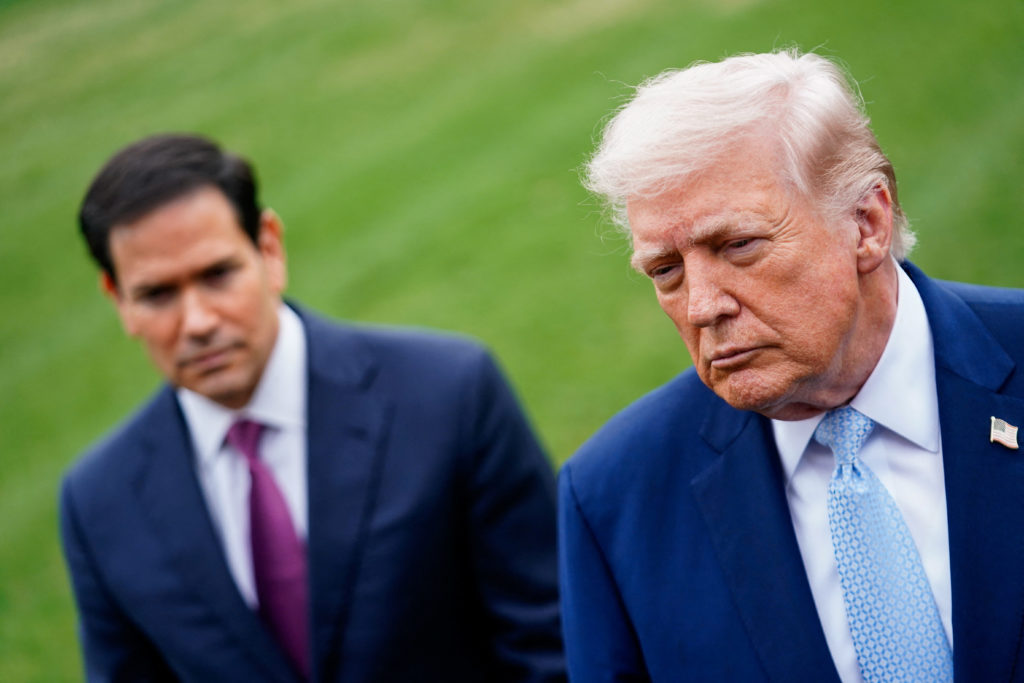
Trump’s Remarks on Iran and the Strait of Hormuz
On a recent Friday, President Donald Trump addressed reporters as he departed the White House, making bold assertions about Iran’s military capabilities and their influence in the critical Strait of Hormuz. According to Trump, Iran is “finished” from a military standpoint, yet he pointed out that they are still managing to “clog up” this vital shipping lane.
The Importance of the Strait of Hormuz
The Strait of Hormuz is a crucial waterway that connects the Persian Gulf with the Arabian Sea, serving as a chokepoint for oil shipments. More than 20% of the world’s crude oil passes through this strait, making it a focal point in international trade and economics. Trump emphasized the need for military involvement to ensure its security, describing it as a “simple military maneuver” that nonetheless requires support in terms of “ships” and “volume.”
Trump’s remarks highlight the complex geopolitical landscape where U.S. military power intersects with global trade routes. He expressed a desire for nations reliant on the strait to take a more active role in its protection, underscoring the collaborative efforts necessary for maintaining stability in this region.
NATO’s Response and International Cooperation
In the same press availability, Trump revealed that many of America’s allies, including NATO countries, had turned down his requests to assist in securing the Strait of Hormuz. This situation raises questions about the current state of international alliances and the effectiveness of cooperative defense strategies.
The president remarked, “It would be nice” if other countries would step up, reflecting a sense of frustration with the lack of collective action. The reliance on American military might in international waters often raises the issue of shared responsibility and the burden placed on the U.S. military.
Trump’s Reaction to Iran’s Executions
Following his commentary on military tactics, Trump was asked a pointed question about the Iranian government’s recent execution of three men accused of violence during anti-government protests. His response was one of condemnation, referring to the executed individuals as “thugs and animals.” Trump characterized the events in Iran as a tragic reflection of the government’s oppressive tactics against dissenters, stating, “I can’t hit anybody harder than we’ve hit them.”
This part of the discussion highlights the often fraught relationship between the U.S. and Iran, exacerbated by incidents that underline human rights abuses. Trump’s straightforward criticism aligns with his administration’s general stance toward regimes perceived as authoritarian or oppressive.
Discussing Military Strategy in the Persian Gulf
As the conversation progressed, Trump was probed about potential military plans targeting Kharg Island, which is vital for Iran’s oil export infrastructure. His cryptic answer—“I may have a plan, I may not”—left open the possibility of future military actions. “But I can’t tell you that,” he added, showing his intent to keep strategic information closely guarded.
Trump’s evasive nature regarding military strategies reaffirms the complexities of U.S. military policy in the region and the often unpredictable nature of international relations. The mention of Kharg Island is significant, as any action there could send ripples throughout the global oil market and further destabilize an already tense situation.
The Role of Journalism in Democracy
In the backdrop of these discussions is a campaign to support journalism, emphasizing the importance of a free press in maintaining a healthy democracy. As debates around national security and international interventions unfold, the need for reliable reporting on these topics becomes ever more critical.
Organizations like PBS NewsHour play a vital role in providing insight and context, reminding citizens that informed dialogue is essential in navigating complex global issues. Supporting such trusted journalism endeavors reinforces the idea that an informed public is pivotal to democracy itself.
In summary, Trump’s interactions with the press reflect a deep entanglement of military strategy, international relations, and human rights issues enveloping the situation in Iran. As global powers navigate these challenges, the discussions surrounding the Strait of Hormuz and U.S. military involvement continue to be pivotal in shaping the landscape of international diplomacy.



