

The Hyperbolic Surge of Crude Oil Prices and the Implications of the Strait of Hormuz Closure
Crude oil prices have surged to staggering heights in 2026, with WTI, the U.S. oil benchmark, nearly doubling to over $112 a barrel. Brent, the global benchmark, has risen by almost 80%, now trading above $109 per barrel. The primary catalyst? The near-closure of the Strait of Hormuz, a critical maritime corridor essential for global energy and food supply.
A Crucial Global Floating Highway
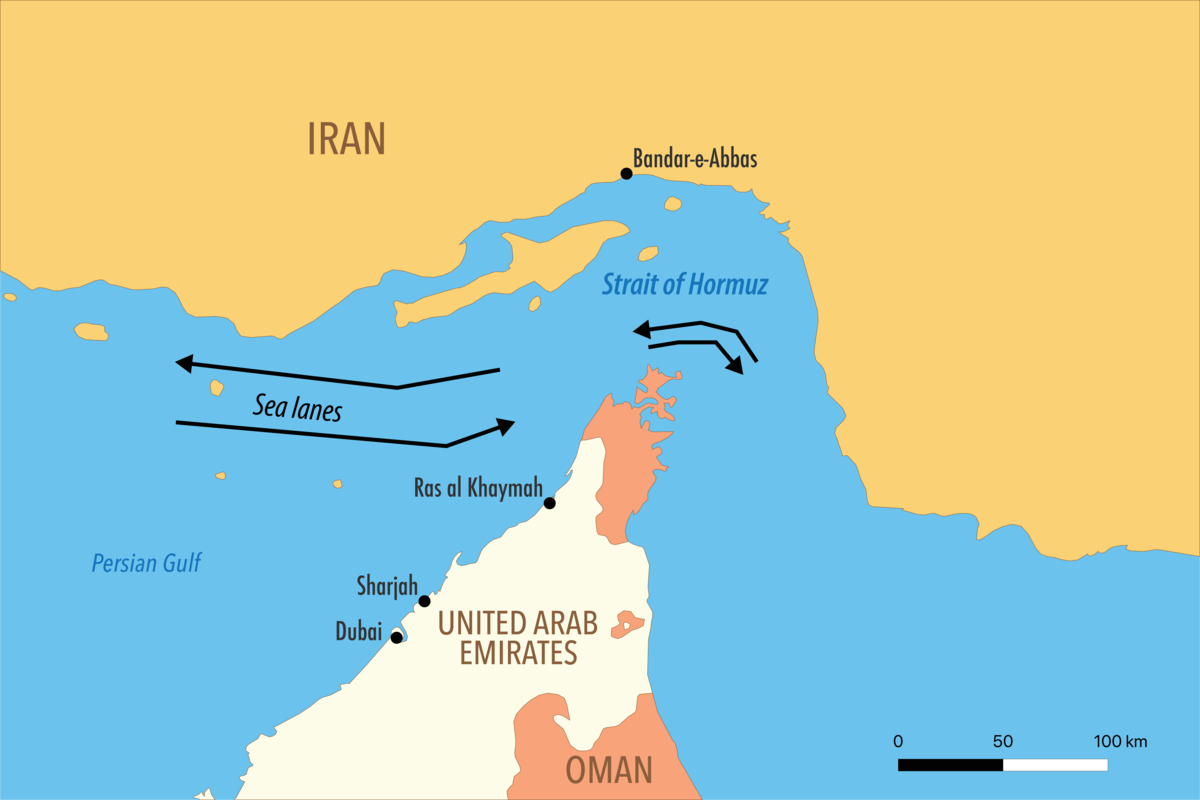
The Strait of Hormuz serves as a vital artery for global trade, with approximately 20% of the world’s crude oil and liquefied natural gas (LNG) shipment passing through daily. Prior to the escalations in geopolitical tensions, this waterway was predominantly safe and essential not just for energy markets but also for global food supplies, given that the Gulf region is a significant exporter of fertilizers and a major importer of food.
Recent military actions by Iran have made navigating this narrow strait perilous. By attacking vessels attempting to leave the Persian Gulf, Iran has effectively obstructed the free flow of vital supplies. This has created an environment where shipping companies find it nearly impossible to secure insurance for passage, resulting in a significant standstill in maritime traffic.
Working on Workarounds
Reopening the Strait of Hormuz doesn’t seem to be at the forefront of the U.S. military’s priorities. In a recent televised address, President Trump stated that the Strait would “open up naturally” once military operations are completed and urged other nations to take initiative in reopening the waterway. Following this declaration, around 40 countries convened via video conference to strategize about restoring safe passage.
In the interim, the world is increasingly relying on emergency oil stockpiles and alternative shipping routes. The International Energy Agency (IEA) has orchestrated a remarkable release of 400 million barrels of oil from emergency reserves, equating to about 20 days’ worth of supply from the Strait. Before the escalation of tensions, IEA member countries controlled over 1.2 billion barrels, allowing them the flexibility to manage supply disruptions effectively.
Saudi Arabia has stepped up its oil exports via the East-West Pipeline, which now operates at full capacity, transporting about 7 million barrels per day (BPD), a significant jump from 1.7 million BPD before the crisis. Meanwhile, the UAE’s Abu Dhabi Crude Oil Pipeline can bypass the Strait entirely, supplying up to 1.8 million BPD to terminals in the Gulf of Oman.
The Coming Global Supply Crunch and Economic Impact
Despite these measures, emergency stockpiles will not last indefinitely, and the bypass pipelines cannot completely mitigate the disruption caused by the Strait of Hormuz’s closure. Furthermore, these alternatives don’t address the significant issues arising from restricted LNG and food supplies. Eventually, these supply challenges are poised to exert substantial pressure on the global economy.
The prolonged closure of the Strait is expected to lead to higher prices over time. Even when it eventually reopens, resuming effective supply chains will be a protracted process. Experts warn that the world may face significant supply shortages and economic contraction in the near future. A study by the Federal Reserve Bank of Dallas posits that a 90-day closure of the Strait could result in a 2.9% quarterly decline in GDP. If the situation extends over two quarters, the economic impact could produce negative growth for the remainder of the year.
The Strait Needs to Reopen Soon to Prevent Economic Damage
The outlook is clear: the longer the Strait of Hormuz remains perilously closed, the higher oil prices are poised to soar. While emergency stockpiles and alternative routes are providing temporary relief, they cannot cover the gap indefinitely. The sustained closure carries escalated risks for the global economy, a concern that investors and policymakers must monitor closely. As the situation evolves, its ramifications will ripple through markets around the world, underscoring the critical importance of this vital supply route.



