

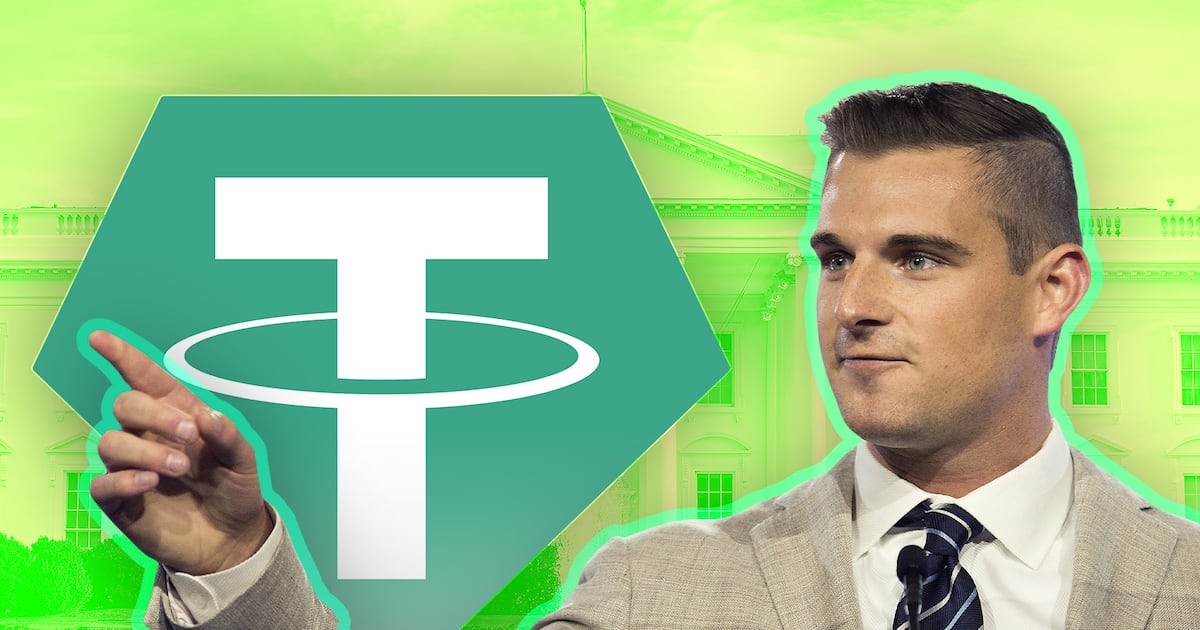
Tether’s Strategic Moves: Weathering the Crypto Storm
As the cryptocurrency market experiences significant volatility, Tether—home to the world’s largest stablecoin, USDT—is making strategic decisions to navigate the downturn. Bo Hines, a top executive at Tether, recently highlighted the company’s proactive approach during the rocky market conditions that have seen Bitcoin plummet to a 16-month low.
Investing in Hard Assets
During a presentation at the Digital Assets at Duke conference, Hines expressed confidence in Tether’s ability to withstand market fluctuations due to its shift towards hard assets. "Even in a torturous market like today, we’re probably the crypto company that’s sweating the least," he noted. His assertion rests on Tether’s increasing investment in tangible assets such as gold and real estate—elements that inherently possess value regardless of market sentiment.
This diversification into hard assets reflects a broader trend among cryptocurrency firms seeking stability through less volatile investments. The Tether executive emphasized that their portfolio now includes gold, Bitcoin, and land, reinforcing their commitment to acquiring assets that maintain inherent worth.
The Status of USDT
According to recent data from DefiLlama, Tether’s USDT commands a staggering market capitalization of about $184 billion. Nonetheless, Tether’s US-domiciled subsidiary, USAT, launched just last month, currently holds a modest circulating supply of $20 million. This blend of established presence and new ventures illustrates Tether’s ambition in a competitive landscape.
Expansion Beyond Core Functions
Tether is not just resting on its laurels; it has expanded its business model far beyond merely supporting its core stablecoin. The latest reports indicate a significant increase in the percentage of "high-risk" assets backing USDT—from 17% to 24% between September 2024 and November 2025. Conversely, its holdings in U.S. Treasury bills have diminished, indicating a strategic pivot towards riskier, yet potentially more lucrative, investments.
The Gold Bullion Venture
One of Tether’s noteworthy developments is its burgeoning gold reserves. As per a Bloomberg report, Tether has positioned itself as one of the leading holders of gold, rivaling sovereign nations and multinational corporations. This move into commodities is not just for show; it’s a calculated strategy to create a safety net for its users amidst volatile markets.
Diverse Investment Portfolio
Beyond gold, Tether has shown a keen interest in agricultural investments, becoming the third-largest shareholder in Adecoagro, an Argentine firm specializing in milk and rice production. This agricultural engagement reflects Tether’s desire to diversify its asset base further, mitigating risks associated with a singular investment strategy.
Innovative Business Ventures
Tether’s evolution also includes a suite of innovative projects that aim to broaden its technological footprint. The company has ventured into Bitcoin mining, software development for crypto wallets, and even asset tokenization through its Hadron platform. Additionally, it has launched a decentralized messaging app, Keet, alongside a wellness application and has invested in humanoid robotics through Generative Bionics.
These diverse pursuits even led Tether to propose an acquisition of the Italian football club Juventus, showcasing its willingness to explore complementary business avenues. Although the proposal was ultimately rejected, it underscores Tether’s ambition to become a multifaceted tech company.
Controversies and Credit Rating Concerns
Despite these ambitious strides, Tether is not without its critics. Following its asset diversification, S&P Global downgraded Tether’s stability assessment, pointing out that the increased reliance on higher-risk reserves may expose the company to significant vulnerabilities during market downturns. This warning reflects broader concerns within the financial community regarding the safety and stability of assets backing stablecoins amid turbulent economic conditions.
By cultivating hard asset investments, exploring innovative ventures, and responding to market demands, Tether is navigating the complex crypto landscape with an eye toward long-termsustainability. While it faces challenges and skepticism from credit rating agencies, its leadership claims that a diversified asset portfolio positions Tether favorably in an unpredictable market.
In sum, Tether’s strategic pivot towards hard assets and new business ventures illustrates its commitment to not just surviving but thriving in a market that is anything but stable. As the crypto landscape evolves, Tether seems intent on redefining its role—not just as a major player in stablecoins but as a comprehensive technology firm with varied interests across multiple sectors.



