

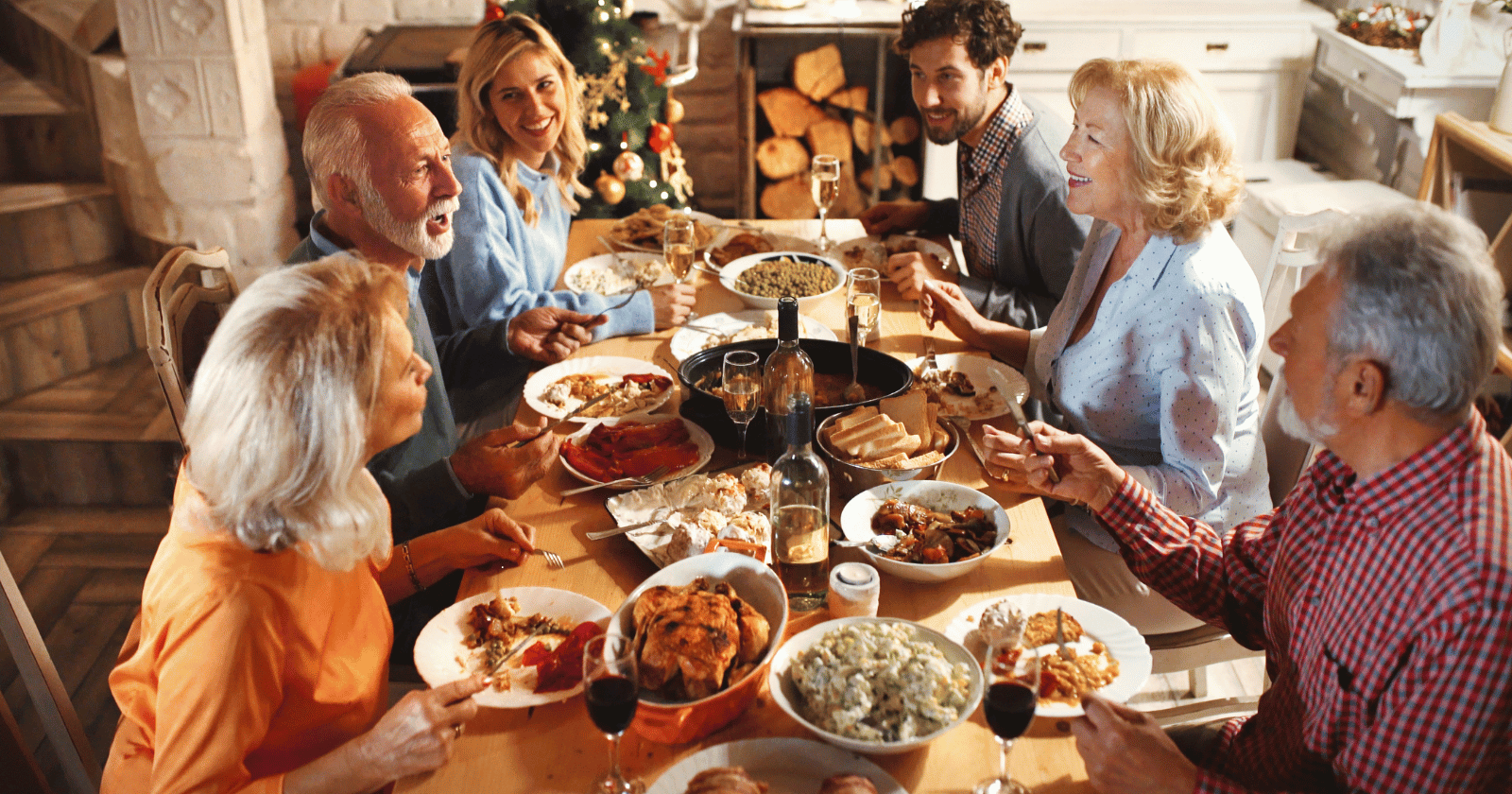
Family dinners have an uncanny knack for turning from laughter and chatter to icy tension in a heartbeat, especially when someone casually tosses out a loaded question. It is almost a ritualistic moment, one that is all too familiar — “So, when are you having kids?” or “These days, young people just don’t want to work.” Suddenly, the roast chicken seems to lose its appeal, plates become infinitely interesting, and you find yourself wishing for the comforting embrace of your couch with a good Netflix series.
If you grew up in a conservative household, you likely resonate with this experience. Family dinners were never simply about food; they were a minefield of opinions and values that could explode at any moment. Conversations could morph into heated debates with surprising velocity, and often, silence felt like a safer bet than honesty.
As I’ve grown older, I’ve come to recognize that these arguments rarely revolved around the specific topics being discussed. Instead, they tapped into a deeper vein of values, intricately woven into discussions about identity, class, and the ever-present fear of change.
1. “Kids these days don’t want to work hard”
This phrase typically lands like an accusation, creating a palpable tension. Baby boomers often fondly recall how hard they worked, as if younger generations emerged from childhood on a cloud of privilege, indulging on avocado toast.
The reality, however, is that the concept of hard work has transformed. Boomers often associated hard work with relentless endurance in a stable job, whereas younger generations prioritize adaptability. They seek roles that offer flexibility, opportunities for remote work, and a chance to freelance, all in a bid to avoid burnout before reaching their mid-thirties.
When I departed from a stable corporate job to pursue writing, it felt as if my mother viewed my decision as reckless. To her, success equated security; to me, it meant freedom and personal alignment. Each perspective holds validity, yet both sides often struggle to recognize the other’s viewpoint without judgment.
What boomers label “laziness” can often be reframed as a desire to refuse unnecessary suffering.
2. “Marriage isn’t what it used to be”
Upon hearing my mum say, “In my day…,” I mentally prepare for a lively discussion.
For boomers, marriage was an anchor, symbolizing stability, respect, and belonging. It was not solely about love but survival. Today, marriage is seen more as a choice than a societal milestone. Many people delay marriage or choose to skip it altogether, and leaving an unhappy union is often viewed as a courageous act rather than a failure.
A survey from the Pew Research Center revealed that nearly 47% of adults under 30 are single, living without partners or committed relationships. Boomers interpret this trend as decay, while younger generations view it as evolution.
We are reshaping the concept of commitment, moving from a mindset of “forever, no matter what” to one that emphasizes “forever, as long as it’s healthy.”
3. “You should buy a house; rent is just throwing money away”
This financial sermon rings out at nearly every family gathering.
Boomers were raised with the belief that homeownership signifies success, and to some extent, they had a point; they purchased homes when prices required only a few years’ worth of salaries. Today, the average millennial grapples with student debt, unstable job markets, and housing prices that resemble phone numbers.
When I shared with my parents that many in my generation may never own homes, they reacted as if I had revealed a catastrophic personal failure. However, homeownership no longer defines adulthood for many; some prefer the flexibility of living lightly, traveling frequently, and avoiding the weight of a mortgage.
To explain that to older relatives can feel like attempting to demonstrate TikTok to a typewriter. They equate “no house” with “no ambition.”
4. “This generation is too sensitive”
Every boomer seems to love tossing this phrase around.
“Back in my day, we just got on with it,” they might say, but therein lies the issue. Many boomers grew up in an era that discouraged emotional expression; talking about feelings was often viewed as a weakness. Therapy was reserved for the “crazy.” People learned to bury pain beneath forced smiles.
Younger generations are dismantling this outdated pattern. We openly discuss mental health, trauma, and boundaries because we do not wish to perpetuate the same emotional repression.
When I told my mother about my therapy sessions, she responded with confusion, asking, “Why? What’s wrong?” But the reality is that nothing has to be “wrong” to seek support; many simply choose not to carry unhealed wounds into every relationship.
Sensitivity is not synonymous with weakness; it signifies awareness. While such awareness may be uncomfortable for some, it is the very key to familial healing.
5. “Back in my day, we respected our parents”
This phrase carries an emotional weight, especially for those who grew up in homes where respect meant silence.
For boomers, respect often came packaged with obedience; questioning authority was not encouraged. For younger generations, however, respect is viewed as a mutual exchange — a two-way street. It involves active listening, not just compliance.
When I began to challenge outdated ideas about gender roles within my family, my mother sighed and remarked, “You’ve changed.”
I have changed, indeed. Growth requires it. Ironically, boomers themselves were once rebels challenging authority and defying norms, only to later become the traditions they initially resisted.
At times, I wonder if their frustration toward us mirrors their own unvoiced frustrations with the parts of themselves they suppressed to conform.
6. “People are too obsessed with identity these days”
Discussions about gender, race, or sexuality can ignite the most dramatic family dinner explosions.
To boomers, these topics often feel foreign, even threatening, as they grew up in a world with rigid identity definitions. On the other hand, younger generations seek to voice identities long overlooked and fight for recognition.
When my uncle once ridiculed my cousin’s pronouns, my cousin calmly countered, “You didn’t have to fight to be respected for who you are; I do.” This simple yet poignant exchange left him momentarily speechless.
Boomers are not heartless; rather, they were raised in an environment where fitting in often took priority over standing out. However, societal evolution relies on courage outgrowing conformity, a shift that typically begins with uncomfortable dialogues.
7. “Social media is ruining the world”
This statement carries grains of truth but is often oversimplified.
Yes, social media has the potential to be toxic. Yet, it has also provided a platform for marginalized voices, fostered community connections, sparked movements, and transformed isolation into solidarity.
When older relatives lament, “People don’t talk face-to-face anymore,” they overlook the reality that, for many, online spaces were the only venues where they could freely express themselves.
It was through social platforms that I first encountered concepts of self-worth, feminism, and emotional healing, shared by creators who had the audacity to address what I couldn’t even articulate.
The internet serves as a double-edged sword — it can be both a mirror and a monster, contingent on usage. Perhaps that encapsulates the real generational divide: boomers were reared under external authorities (the media, religious institutions, family) while younger generations evolved with the capability to cultivate their individual narratives.
8. “Everyone’s too political these days”
At almost every family dinner, someone inevitably grumbles, “Can we not talk politics?”
This translates to: “Can we not discuss matters that make me feel uncomfortable?” However, silence itself is a political stance.
Younger generations have witnessed the repercussions of complacency — climate catastrophe, socio-economic inequalities, and oppression all fueled by inaction. We’ve grown to understand that awareness is not radical; apathy is.
As philosopher and shaman Rudá Iandê articulates in Laughing in the Face of Chaos, “Real change doesn’t begin when things feel safe; it begins when the illusion of safety breaks.”
This illusion tends to maintain a veneer of calmness at family tables but can breed disconnection. Peace is often misconstrued as avoidance, yet authentic peace that fosters healing necessitates an embrace of truth — and truth inevitably shakes the table a bit.
9. “The world’s just going downhill”
Every generation seems convinced that theirs was the last “good” one. Boomers hold fond memories of Woodstock and affordable education, while millennials contend with inflation, climate anxiety, and existential dread as morning staples.
Still, every era is drenched in its own brand of chaos.
The key difference today is visibility; the chaos and struggles of prior generations flew under the radar of our 24/7 news cycle. Today, every calamity is captured and disseminated in real-time, creating the impression that our world is crumbling faster than ever before.
Rudá Iandê offers profound insights on this matter in Laughing in the Face of Chaos. He posits that the more we resist uncertainty, the more power it has over us. Recognizing how we laugh in the face of chaos isn’t denial; it’s a profound understanding that the world has always been turbulent, yet humanity continues to adapt.
Perhaps the world isn’t spiraling into despair; perhaps it is merely shedding its old skin.
Final Thoughts
The older I become, the more I realize that these dinner-table debates seldom revolve around right or wrong. They are rooted in fear — fear of irrelevance, misunderstanding, and the disquieting acknowledgement that what once felt reliable no longer applies.
Yet beneath that fear resides love, a complicated cocktail of nostalgia and desire for safety that compels those around the table to cling to the familiar.
However, where safety exists, growth often does not.
Thus, perhaps the objective of family dinners transcends achieving agreement; it can instead revolve around cultivating curiosity. Rather than adhering to the instinct to “win” debates, we might strive to comprehend the roots of each other’s beliefs.
The next time your father exclaims, “This generation doesn’t get it,” take a moment to breathe and ask, “What was it like when you were my age?”
You may still get into a spirited argument, but perhaps, just perhaps, you’ll savor a bit more empathy alongside the roast chicken.
What’s Your Plant-Powered Archetype?
Ever wonder what your everyday habits say about your deeper purpose—and how they ripple out to impact the planet?
This 90-second quiz reveals the plant-powered role you’re here to play, and the tiny shift that makes it even more powerful.
12 fun questions. Instant results. Surprisingly accurate.



