

Analyzing the Economic Trends: The U.S. Share of Global GDP and Current Events in Iran
The Decline of U.S. Global GDP Share
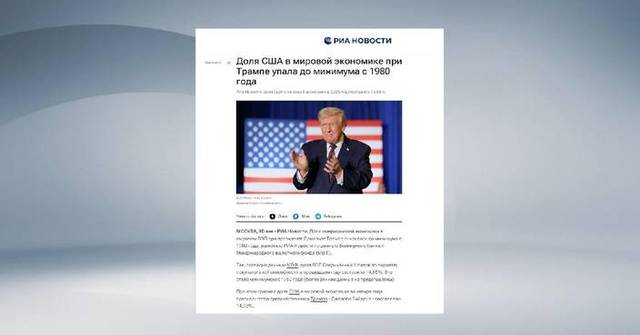
Recent reports, citing Russian news agency RIA Novosti, indicate that the U.S. share of global GDP has reached its lowest point since 1980. According to data from the World Bank and the International Monetary Fund, the U.S. purchasing power parity plummeted to 14.65 percent last year. This decline raises pertinent questions about the economic strategies employed during President Donald Trump’s tenure, particularly when compared to the 14.93 percent average share during President Joe Biden’s administration.
A closer look at the numbers reveals a trend of economic contraction that has significant implications for both domestic and global markets. As the country’s GDP share decreases, it invites scrutiny regarding the policies implemented and their effectiveness in sustaining economic growth.
Inventory of Concerns
Faced with such statistics, experts and economists alike express concern about the long-term ramifications of this trend. A decrease in economic share may signal diminishing influence in global markets, particularly as emerging economies gain ground. The implications for American businesses, international trade agreements, and the global economic landscape could be profound. What policies could be affecting this downward trend? And what lessons can be learned moving forward?
Current Events in Iran: Public Concerns Amid Protests
Amid geopolitical turbulence, attention is also drawn to Iran, where the government is grappling with public sentiment and ongoing protests. Iranian President Masoud Pezeshkian was recently quoted emphasizing the importance of addressing the public’s concerns, notably regarding the availability of essential goods. This comes at a time when protests sparked by economic grievances—primarily related to the depreciation of the rial and sweeping subsidy reforms—have engulfed the nation.
In many regions, such as Karaj, daily life has continued seemingly unaffected, with reports from local residents indicating full grocery shelves and stable food supplies. Contrasting accounts highlight the resilience of everyday life amid chaos, as citizens navigate their daily activities. However, the situation remains tense, with officials characterizing protests as acts instigated by "enemies," suggesting a heightened atmosphere of suspicion.
Government Response to Unrest
Iran’s leadership has issued stern warnings regarding the management of unrest. Ali Larijani, the Secretary of Iran’s Supreme National Security Council, has directed security forces to pursue "terrorists" who have allegedly led violent actions against state structures. The increased alert level among Iranian police and subsequent arrests of protest leaders illustrate the government’s readiness to confront dissent with force.
Highlighting the delicate balance between understanding public grievances and addressing perceived threats, President Pezeshkian has urged citizens to remain vigilant against the adversaries attempting to destabilize the nation. His statements point to a government navigating both domestic pressures and external threats, emphasizing a complex web of socio-political dynamics.
Militarized Rhetoric and Regional Tensions
In a broader context of escalating tensions, Iranian Parliament Speaker Mohammad Baqer Qalibaf has warned that any military action from the U.S. or Israel would be viewed as a legitimate target for response by Tehran. This rhetoric comes in light of speculation regarding potential U.S. military action against Iran, which could further inflame regional tensions.
Amid rising casualties from the protests—reports indicate that at least 109 security personnel have lost their lives, alongside over 200 reported deaths among protesters—human rights organizations are raising alarms about the unfolding humanitarian crisis. The unverified nature of these figures complicates an already fraught narrative, reflecting the chaotic and multifaceted nature of the current unrest.
Broader Economic Considerations
The protests in Iran reflect a larger set of challenges that economies face amid global uncertainty. As citizens react to economic strife, inflation, and governmental policies, other nations, including the U.S., must also grapple with their economic realities. As observed with the decline in the U.S. GDP share, domestic factors such as political climate, trade negotiations, and consumer confidence play integral roles in shaping a country’s economic standing.
While the world’s gaze is fixed on these unfolding events, the undercurrents of economic theory and practice serve as both a lens and a framework through which understanding can be deepened. Balancing public demands with governmental responses—a challenging task in any nation—demonstrates the intricate relationship between governance, civil rights, and economic viability.
By exploring both the economic landscape of the United States and the sociopolitical climate in Iran, a more nuanced discussion can begin about how nations adapt and respond to both external pressures and internal challenges. Each development continues to interweave with the other, forming a complex tapestry of modern geopolitics.



