

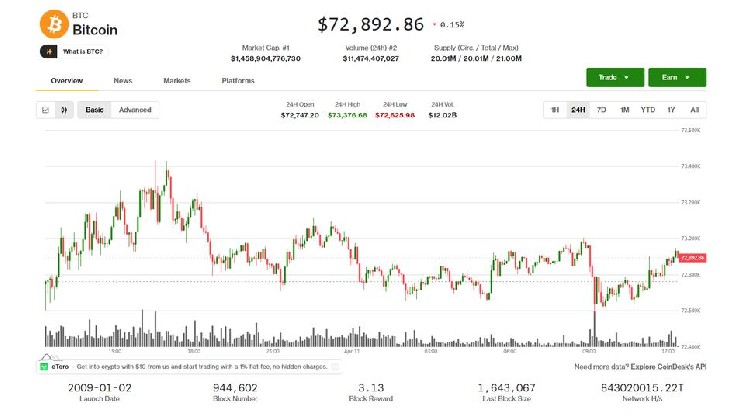
Bitcoin Market Update Amid U.S.-Iran Talks
As of Saturday, Bitcoin is trading just below the $73,000 mark, reflecting a modest decline of approximately 0.2% over the past 24 hours. This slight dip comes amid significant geopolitical developments, as high-level discussions between U.S. and Iranian officials commence in Islamabad. The broader cryptocurrency market appears to be holding steady, exhibiting minimal fluctuations.
Market Movements After Ceasefire
Throughout the week, the cryptocurrency market experienced an uptick, largely driven by the announcement of a two-week ceasefire between U.S. and Iranian forces. This respite from hostilities ignited a derivatives short squeeze, effectively eliminating over $430 million in bearish positions. This indicates a moment of optimism among traders, looking to capitalize on an anticipated rebound in crypto valuations.
Performance of Major Cryptocurrencies
Examining the CoinDesk 20 index, we see a modest increase of approximately 0.12% in the past 24 hours. Ethereum (ETH), one of the leading altcoins, also noted a slight rise of about 0.1%. Other significant cryptocurrencies displayed similarly muted movements, suggesting a general atmosphere of caution and consolidation within the market.
Fragile Ceasefire and Regional Tensions
Despite the ceasefire, tensions in the region remain palpable. Israel has continued its airstrikes against Lebanon, while Iran made headlines by announcing plans to impose tolls on ships traversing the strategically crucial Strait of Hormuz. This announcement has drawn criticism from U.S. President Donald Trump, adding layers of complexity to an already volatile situation.
Key Figures in Diplomatic Talks
On the diplomatic front, CNN reported that the U.S. delegation is led by Vice President J.D. Vance, alongside special envoy Steve Witkoff and Jared Kushner, President Trump’s son-in-law, despite lacking an official government position. On the Iranian side, notable figures such as Foreign Minister Abbas Araghchi and Parliament Speaker Mohammad Bagher Ghalibaf are participating. The talks are taking place in Pakistan, which serves as a neutral facilitator in these discussions.
Impact on Maritime Activity
Over the weekend, some maritime traffic has resumed in the Strait of Hormuz following a significant collapse in ship movement that occurred after U.S. strikes against Iran began at the end of February. The resumption of passage through this essential waterway could indicate a slow return to normalcy, although the situation remains unstable and closely monitored by global leaders.
Broader Economic Implications
The geopolitical tensions, coupled with the performance of major cryptocurrencies, provide an intriguing backdrop for investors. As global events unfold, particularly surrounding Iran and the U.S., market participants are likely to remain vigilant, weighing both the potential for inflationary pressures and the evolving landscape of digital currencies.
For those following the impact of these developments, it’s a pivotal moment in both the cryptocurrency market and international relations. Observers of Bitcoin and the broader economic landscape continue to analyze how these interconnected factors will influence future trading conditions and market sentiment.



