

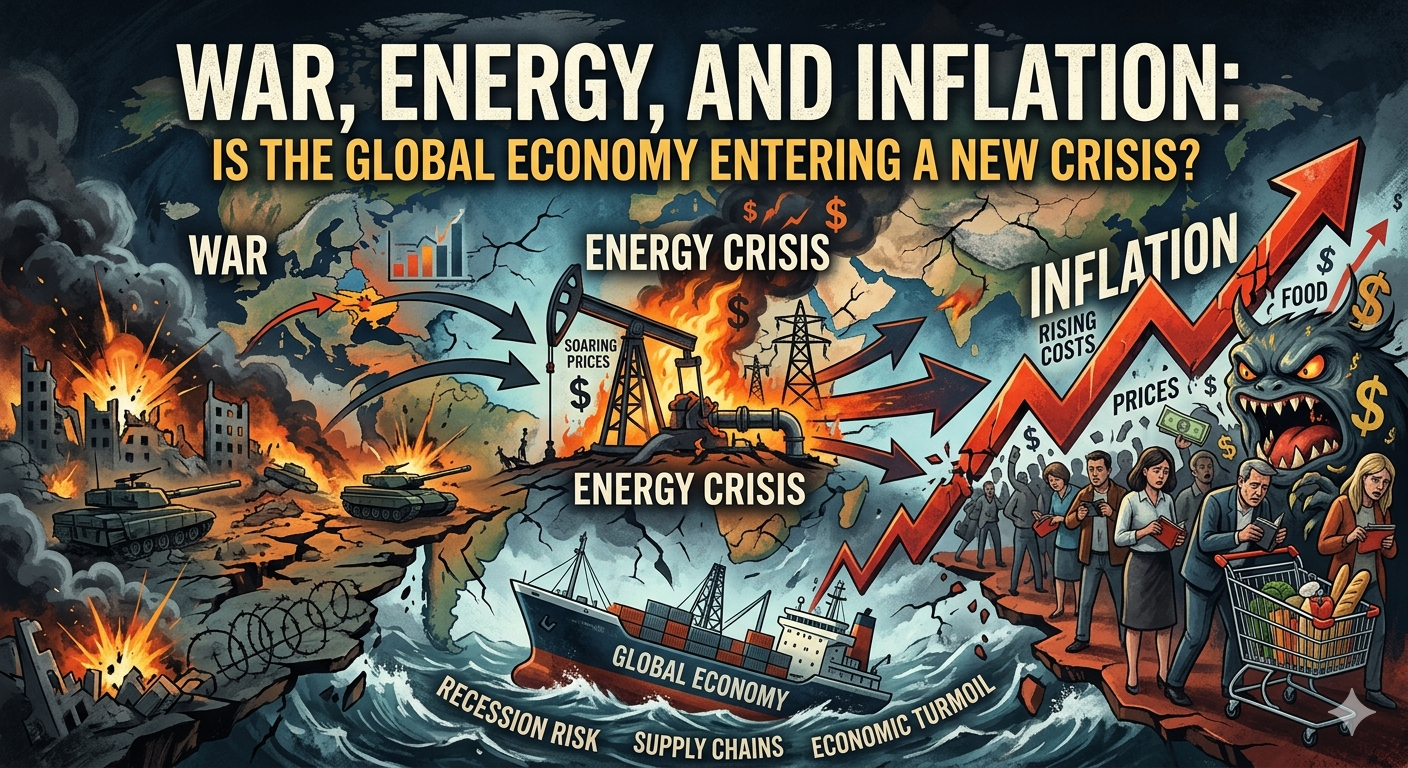
The Current Global Economic Climate: Navigating Uncertainty
There are moments in history when the global economy feels steady and predictable, even if imperfect. Yet, we find ourselves in a notable phase where everything seems intrinsically connected, making it challenging to maintain equilibrium. Today, the world grapples with a precarious synthesis of geopolitical tension, soaring energy prices, and relentless inflation. This scenario prompts pressing questions: Are we on the brink of another global economic crisis, or merely traversing a turbulent phase of adjustment?
The War-Energy Nexus
At the heart of this uncertainty lies the fragile relationship between war and energy. Ongoing tensions involving Iran and the United States, particularly surrounding the strategically vital Strait of Hormuz, reiterate how swiftly conflict can unravel global supply chains. This narrow waterway plays a critical role in global oil exports. Instabilities here have repercussions that extend well beyond local confines; they resonate globally. Oil prices tend to react almost immediately to threats in this region, triggering a cascade of effects that elevates the costs of transportation, food, and essential goods.
Energy: The Lifeblood Turned Weapon
Energy has always been the cornerstone of the global economy. However, during times of conflict, it evolves into an even more significant geopolitical weapon. When supply is compromised—whether by sanctions, blockades, or strategic maneuvers—prices soar. Developed economies grapple with inflationary pressures as costs mount, while developing nations, especially those reliant on imports, face severe challenges. Countries already burdened with debt and limited fiscal maneuverability find themselves squeezed by rising costs and depreciating currencies.
Inflation’s Lived Reality
In such a climate, inflation shifts from being a mere economic term to a stark, lived reality. Families feel the effects through escalating food prices, increasing fuel costs, and diminishing purchasing power. Households are compelled to adjust their consumption patterns. Governments are left to navigate difficult choices between maintaining subsidies for the populace and enforcing fiscal discipline. Central banks find themselves in a tough spot: Should they raise interest rates to curb inflation, risking a slow growth trajectory, or hold steady and permit inflation to undermine economic stability?
The Layers of Economic Complexity
What adds complexity to the current moment is the fact that the global economy has not fully rebounded from previous shocks. The lingering aftereffects of the COVID-19 pandemic, disruptions in supply chains, and earlier inflation spikes continue to cast a long shadow. Layered on top of these existing challenges is the resurgence of geopolitical tensions. The world seems trapped in a non-linear recovery, shifting precariously from one crisis to the next, exacerbated by interconnected vulnerabilities.
Market Reactions and Energy Policy Shifts
Global markets are reacting with a cocktail of caution and uncertainty. Investors remain vigilant, closely monitoring energy price fluctuations. Simultaneously, governments are reevaluating their strategic reserves and energy policies. Some nations are even accelerating their transitions to renewable energy in hopes of reducing reliance on volatile fossil fuel markets. Yet, this transition is fraught with challenges—it demands time, capital, and stability, all of which are often unattainable amidst geopolitical strife.
The Multipolar Order and Its Challenges
Underlying these visible strains is a more profound structural issue: the global economic framework is becoming increasingly defined by a multipolar order. In such a scenario, power is more dispersed and coordination becomes increasingly challenging. Institutions that once stabilized the global economy now struggle with legitimacy and efficacy. Consequently, collective responses to crises are slow and unpredictable, leaving a vacuum that can exacerbate global instability.
Vulnerability of Emerging Economies
For smaller and emerging economies, particularly in regions such as the Horn of Africa, the stakes are higher. These countries often act as price-takers in global markets, lacking the leverage to influence outcomes. A sudden spike in global oil prices can quickly translate into domestic economic hardships, threatening everything from transportation infrastructure to food security. In this light, resilience isn’t merely an economic objective; it’s a vital component of national stability.
Historical Context and Future Concerns
So, are we heading toward a new global crisis? The answer remains elusive, but the signs are notably prominent. The amalgamation of rising energy prices, persistent inflation, and geopolitical instability conjures a historical pattern that frequently heralds economic downturns. Yet, unlike previous crises, today’s challenges are characterized by heightened interconnectedness and complexity, raising the bar for potential longevity.
The Role of Leadership
What remains crucial is the response from governments and institutions. Strategic cooperation, investments in energy diversification, and policies designed to protect the most vulnerable will play pivotal roles moving forward. Equally important is the acknowledgment that economic stability cannot be isolated from political stability. In a world where conflict and economics are deeply intertwined, navigating one necessitates addressing the other.
The current scenario serves as both a litmus test for economic resilience and a challenge for global leadership. The unfolding choices of today will dictate whether we endure a full-blown crisis or pivot toward a more balanced and sustainable system.



