

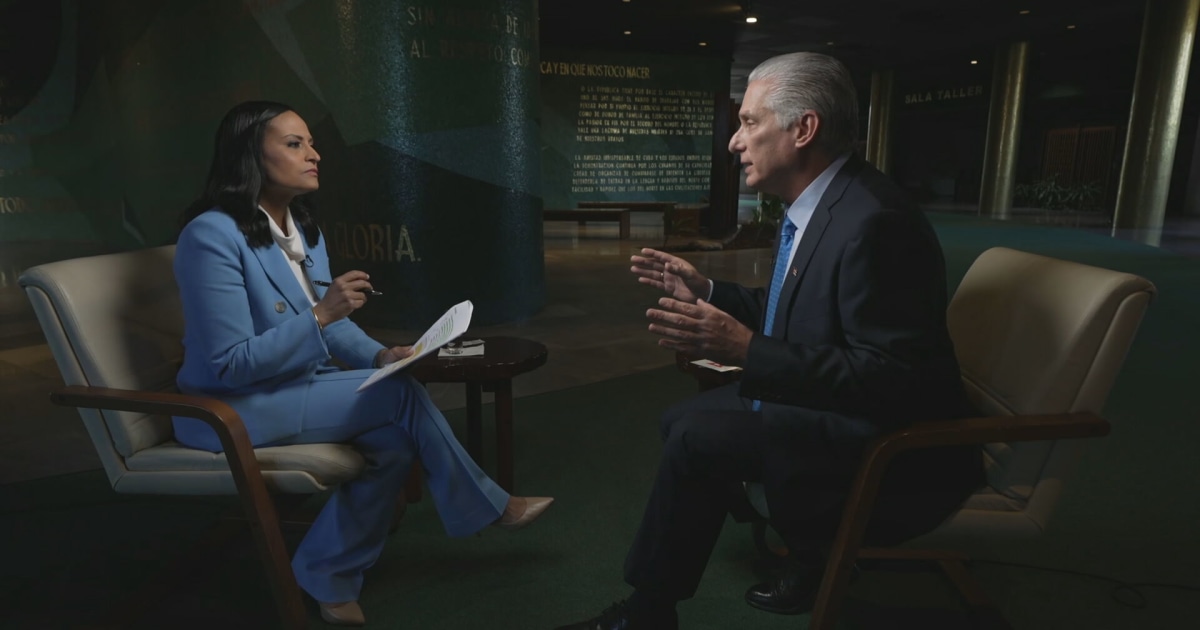
Inside the Cuban Perspective: A Candid Interview with President Miguel Díaz-Canel
In a highly anticipated exclusive interview on "Meet the Press," Cuban President Miguel Díaz-Canel addressed pressing concerns that resonate not only within Cuba but also echo through American politics and diplomacy. The interview provided a rare insight into the Cuban government’s stance on contentious issues such as political prisoners, multi-party elections, and the ongoing dialogue with the United States.
The Tension of Political Repression
At the heart of the discussion was the sensitive topic of political prisoners in Cuba. In recent years, various international organizations and governments have criticized Cuba for unlawfully detaining dissidents. Host Kristen Welker pressed Díaz-Canel on whether the government would commit to releasing these individuals, emphasizing that international relations could hinge on such actions. Díaz-Canel, however, was noncommittal, suggesting that the matter was more nuanced than it appeared. He insisted that the Cuban government operates within its own legal framework, emphasizing that reforms require internal consensus rather than external pressures.
A Stance against U.S. Demands
Díaz-Canel was unyielding in rejecting what he perceives as imperialistic demands from the U.S. government. He argued that U.S. pressures often undermine the sovereignty of nations, insisting that any reform in Cuba must stem from its own cultural and sociopolitical context. Throughout the interview, he reiterated the notion that Cuba will not bow to foreign pressures, declaring, “If we need to die, we’ll die,” to protect their revolution. His passionate remarks reflect a longstanding sentiment in Cuban politics, reverberating through decades of U.S.-Cuba relations marked by animosity and mistrust.
The Complexity of Multi-Party Elections
When the subject of multi-party elections surfaced, the president’s perspective became even more thought-provoking. Díaz-Canel expressed skepticism over the idea of adopting a multi-party system immediately, arguing that Cuba has a unique political history that has forged its current makeup. He framed the current political structure as deeply rooted in social accomplishments achieved under the revolution, advocating for gradual changes that respect the achievements and desires of Cuban citizens.
International Relations on Shaky Ground
The interview surfaced other crucial themes related to international relationships, particularly the ongoing U.S. embargo. Díaz-Canel criticized the blockade, arguing that it has created unnecessary hardship for ordinary Cubans. He described the embargo as a barrier to progress and a tool of coercion, complicating any further dialogues between both nations. His call for an end to the embargo underlines a common plea among Cubans, who seek to foster more constructive relations with the United States.
Underlying Themes of Sovereignty and Resistance
Throughout the dialogue, a recurring theme was Cuba’s emphasis on sovereignty. Díaz-Canel’s steadfast position illustrated the island’s struggle against perceived foreign domination. His rhetoric is designed to resonate not only with Cubans, who have endured decades of isolation, but also with international advocates for autonomy and self-determination.
The Human Cost of Political Policies
The president’s stances serve as reminders of the complex intersection between politics and human rights. As discussions around political prisoners continue, critics suggest that the lack of reforms harm ordinary citizens most. The interview illuminated how governmental policies have real consequences for everyday life in Cuba. Díaz-Canel’s tough rhetoric can often overshadow the personal stories of those affected, creating a disconnect between governmental decisions and individual realities.
What Lies Ahead?
While Díaz-Canel’s interview spurred vibrant discussion over Cuba’s future and its relationship with the U.S., it also left many questions hanging. With increasing calls for accountability and reform domestically and internationally, how the Cuban government will respond to these pressures remains to be seen.
The insights offered by Díaz-Canel paint a complex picture of a nation at a crossroads between tradition and potential reform, showcasing the resilient spirit of the Cuban people amid mounting pressures from both internal and external forces. As both nations navigate this intricate landscape, the future of U.S.-Cuba relations hangs in a delicate balance, enveloped in the echoes of history and the enduring quest for justice and freedom.