

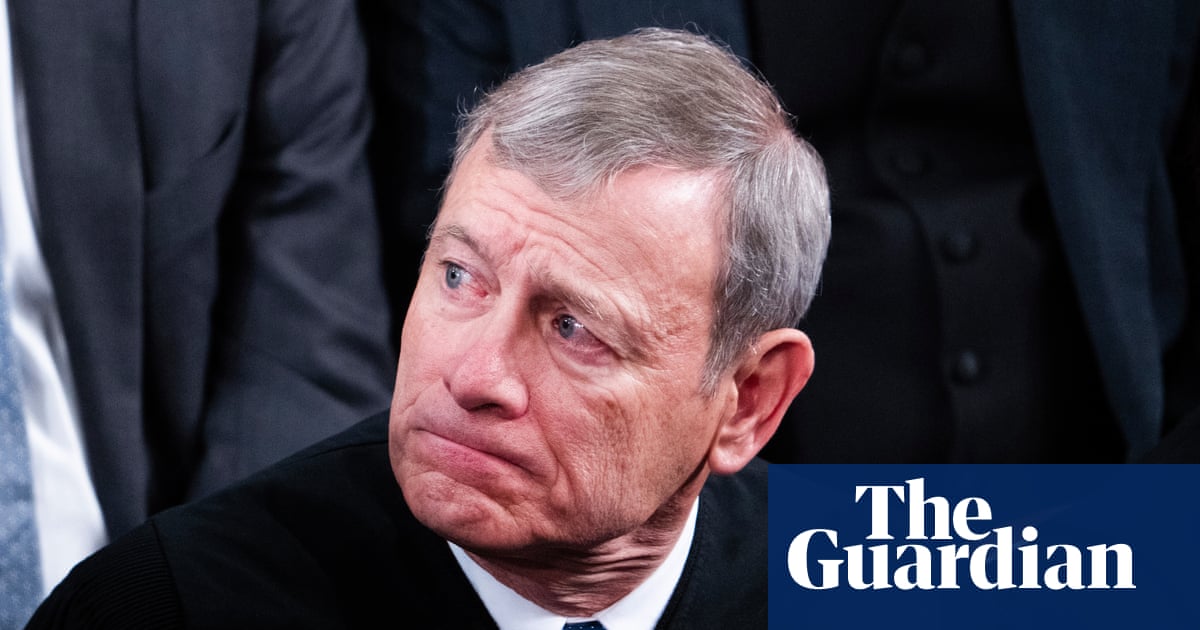
John Roberts Defends the Supreme Court Amid Political Firestorm
In a compelling address to fellow judges and lawyers at a conference in Hershey, Pennsylvania, US Chief Justice John Roberts defended the integrity of the Supreme Court, asserting that its judges are not “political actors.” This statement comes at a time of heightened scrutiny regarding the Court’s recent rulings, particularly a decision that has been perceived as undermining the Voting Rights Act.
The Context of Controversy
Roberts’ remarks resonate deeply in the current political landscape, characterized by a growing skepticism about the impartiality of the judiciary. Many critics argue that recent Supreme Court decisions have aligned too closely with partisan interests, particularly benefiting figures such as Donald Trump and his allies. The Chief Justice sought to clarify this misconception during his speech, stating that the Court is supposed to interpret the law rather than engage in political decision-making.
“Our job is fundamentally different,” Roberts said, emphasizing that the perceptions some hold about the Court being a political tool are misguided. He acknowledged that while the Court occasionally makes decisions that stir public controversy, the focus should remain on what the law stipulates.
Unpopular Decisions and Political Independence
The notion that the Supreme Court is insulated from political processes is a cornerstone of Roberts’ argument. He posited that decisions can often be unpopular, but the judiciary must execute its constitutional responsibility regardless of public sentiment. This principle is critical, as it underpins the trust and legitimacy of judicial processes, particularly when political pressures mount.
The Chief Justice expressed concern over the attacks against lower court judges, calling such threats inappropriate and dangerous. This plea for judicial independence underscores a critical democratic value: that judges must perform their duties free from external pressures or fears.
The Conservative Majority and Regulatory Changes
Roberts’ leadership has coincided with a significant shift in the Court, where conservatives have held a six-justice majority since 2020. This shift has led to a series of landmark rulings that have overturned decades of precedent. Many of these decisions, some argue, have unwittingly enabled Trump’s policies during his presidency, thereby giving rise to widespread speculation about the Court’s motivations.
Notably, the recent ruling on the Voting Rights Act has allowed Republican-led states to embark on aggressive redistricting efforts. This change could have potentially seismic effects on the political landscape, particularly concerning elections involving Black lawmakers, who generally represent Democratic constituencies.
The Shadow Docket and Its Implications
The Roberts Court has also faced scrutiny for its increasing use of the “shadow docket,” a fast-track process that permits expedited rulings without full hearings. This practice has become a flashpoint in the debate surrounding transparency and accountability in judicial decisions. Critics argue that it has enabled the Court to bypass detailed scrutiny of highly consequential rulings, including those that have upheld Trump administration policies on deportation and other contentious issues.
Landmark Rulings and the Current Landscape
Throughout Joe Biden’s presidency, the Roberts Court has delivered several major rulings, including the seismic decision to overturn Roe v. Wade and a ruling that shields presidents from certain legal repercussions for their actions while in office. Such decisions have not only influenced immediate policy outcomes but may also shape the long-term trajectory of American rights and governance.
Conversely, there have been instances where the Court has diverged from strict partisan lines. For example, the Court recently ruled certain tariffs imposed by Trump as illegal, showcasing a degree of independence in judicial reasoning that could challenge prevailing narratives about partisan allegiance.
Tensions and Divergent Opinions
Internal tensions within the Court have also become apparent with the recent dissent from Justice Ketanji Brown Jackson, appointed by Biden. In a disagreement regarding the Court’s approval for Louisiana to redraw its congressional maps, Jackson criticized the decision as “unwarranted and unwise.” Her dissent stands as a stark reminder of the ideological divides within the Court, particularly as decisions surrounding electoral redistricting underscore the profound impacts of judicial choices on democracy itself.
In a rebuttal to Jackson’s critique, Justice Samuel Alito, alongside fellow conservative justices, dismissed her arguments, characterizing them as “trivial and baseless.” This exchange highlights the increasingly charged atmosphere in the courtrooms, where ideological battles are waged not only in public forums but also within the walls of the Supreme Court itself.
Moving Forward Amidst Scrutiny
As Roberts reiterated the judiciary’s role, the landscape remains fraught with challenges that question the integrity and political independence of the Supreme Court. The tension between striving for impartiality while navigating a polarized political climate is palpable. With pivotal decisions looming on the horizon, the relationship between law, politics, and public perception continues to evolve, calling into question what it means for justices to truly uphold the law in a landscape laden with political implications.



